
Last updated November 23, 2026
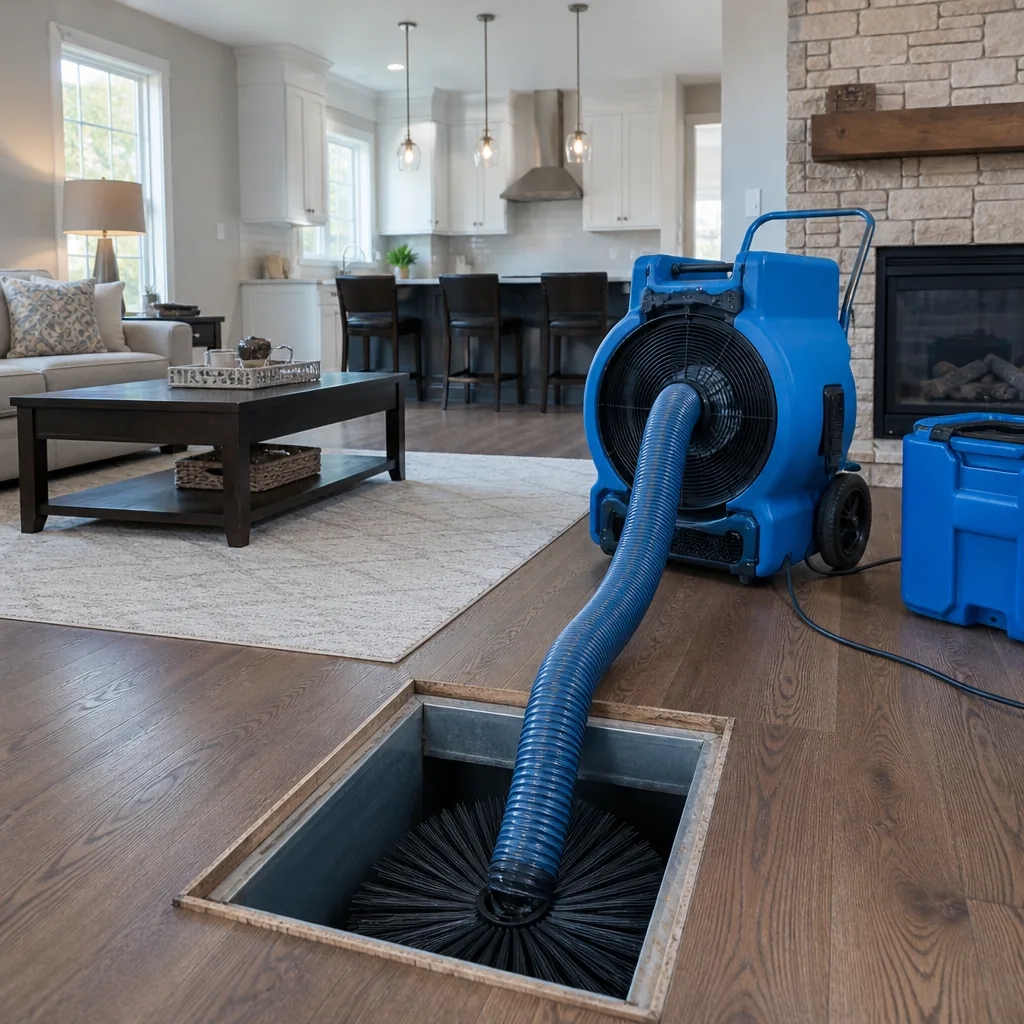 Whole-home duct cleaning
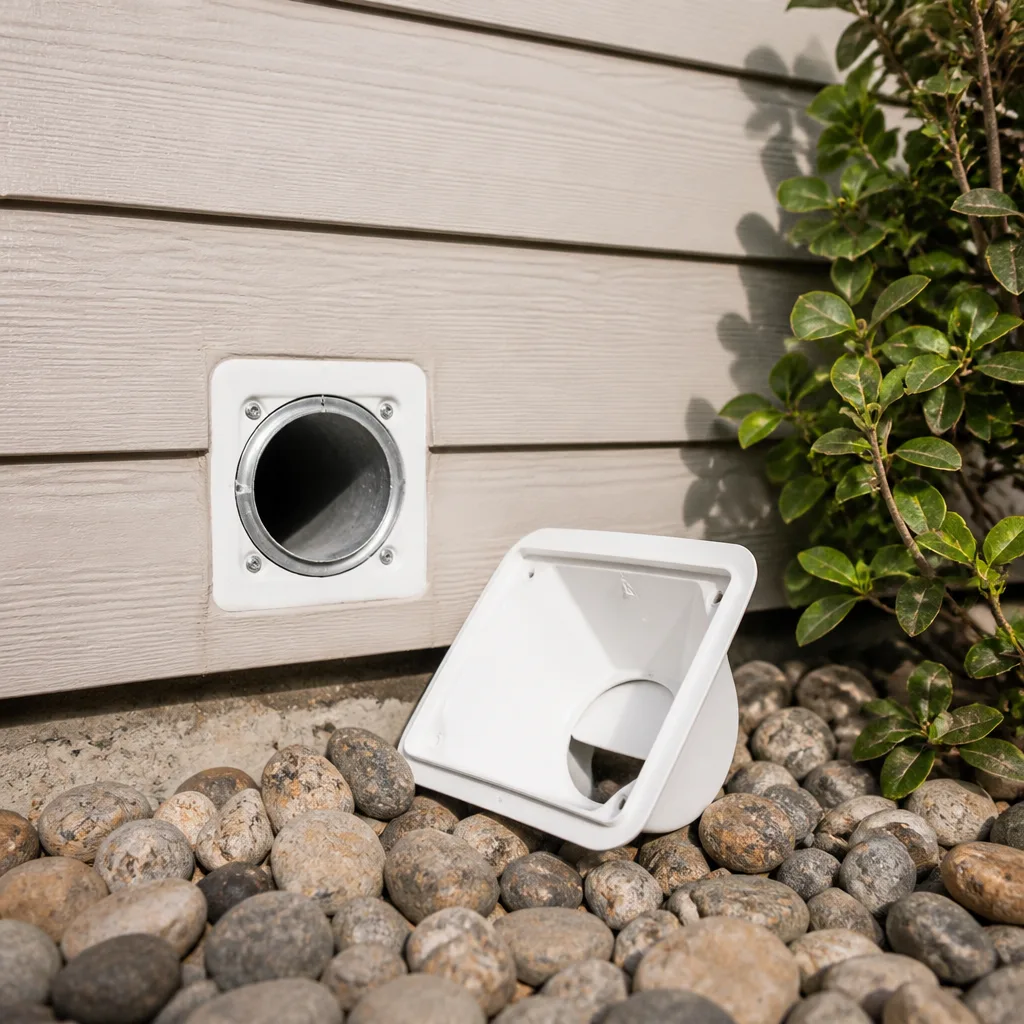 Dryer vent cleaning
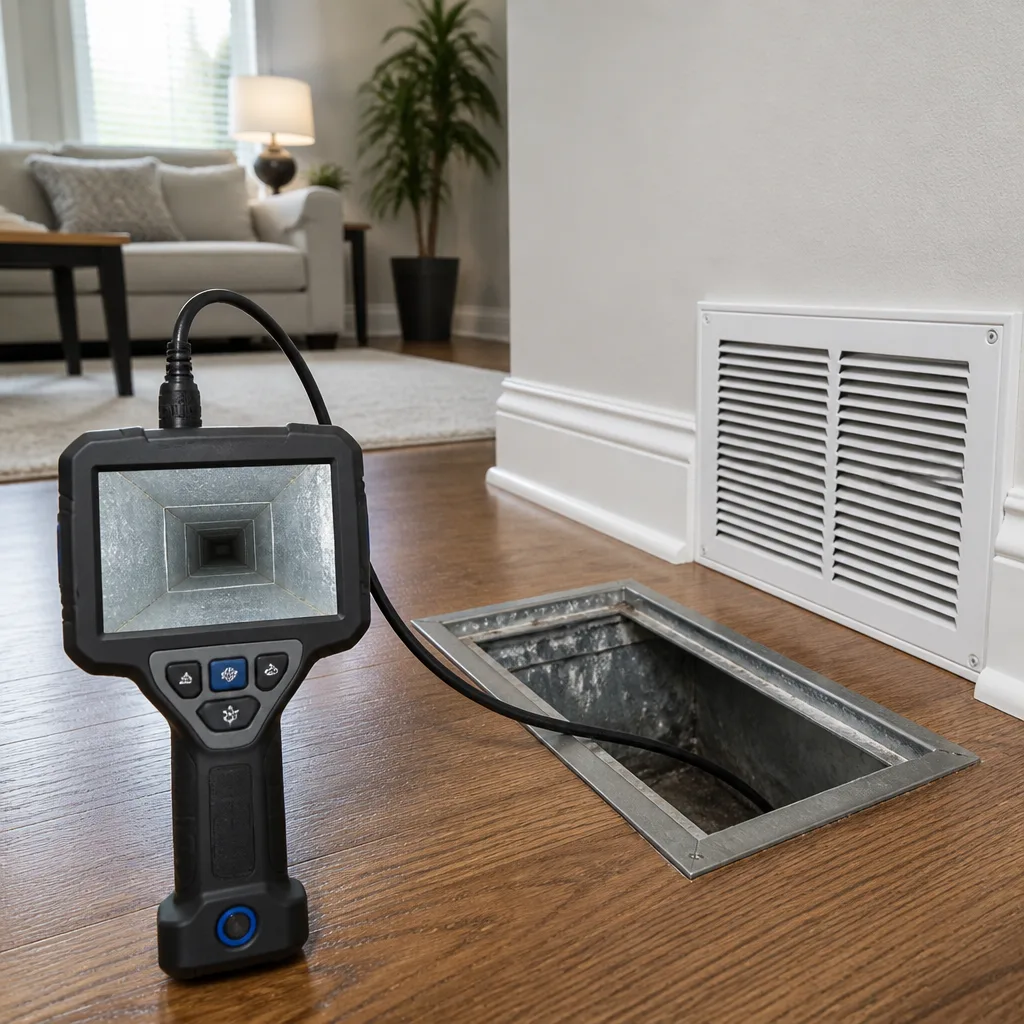 Camera inspection
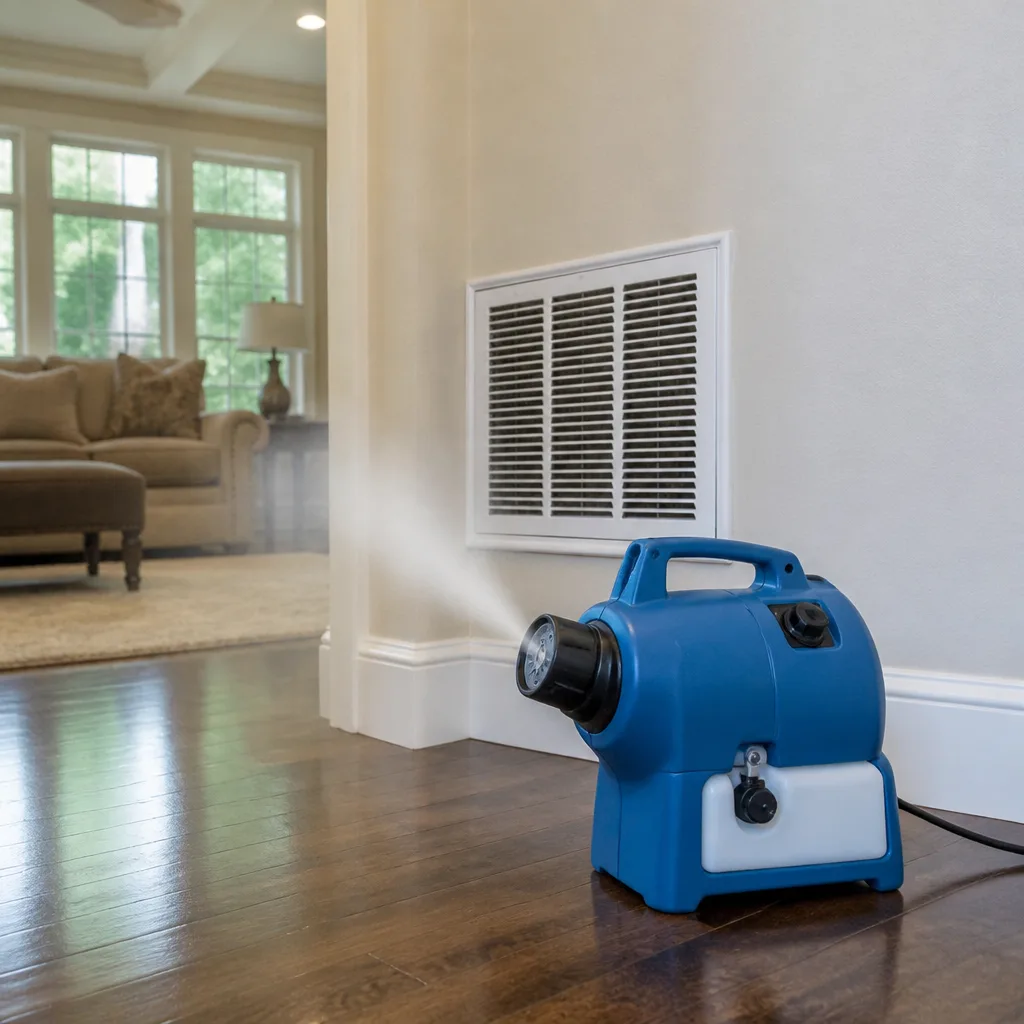 Sanitizing & deodorizing
Whole-system duct and dryer vent check with before-and-after photos - you see exactly what came out of your vents
That "$99 whole-house special" is a bait ad - the real number appears once they are in your hallway, or the "clean" is a shop-vac at the register. We photograph the inside of your ducts before and after instead.
Air Duct Cleaning Warning Signs: A Portola Springs Homeowner’s Reference Guide
If one room in your home is consistently 3-5°F warmer or cooler than the thermostat setting despite a functioning HVAC system, the likeliest culprit isn’t the equipment. It’s debris-restricted airflow in that branch of the duct system.
That’s the uncomfortable truth about duct contamination: it rarely shows up as visible mold or a dramatic dust cloud. It shows up as a spare bedroom that never quite cools, a filter that loads faster than it should, or an odor you’ve stopped noticing because you live with it. In Portola Springs, where tile roofs bake all afternoon and newer homes run tight envelopes, those small performance signals are the ones worth reading. This guide covers the warning signs that actually point to dirty or damaged ducts, which ones you can check yourself this week, and when it’s time to call a specialist with equipment that measures real contamination instead of guessing at it.
Quick Answer
The main warning signs of dirty air ducts are uneven room temperatures, filters that clog in under three weeks, musty or chemical odors when the system runs, visible dust streaks at registers, and allergy-like symptoms that worsen indoors. Any single sign is worth checking; two or more together usually means the duct system needs professional cleaning, inspection, and often sealing. In Portola Springs homes, airflow imbalance between rooms is the most reliable early signal.
Styles & brands we work with
- Whole-home duct cleaning
- Dryer vent cleaning
- Camera inspection
- Sanitizing & deodorizing
Table of Contents
- 1. Airflow Imbalance: The Warning Sign Most Homeowners Miss
- 2. Filter Loading Rate as a Diagnostic Tool
- 3. Odor Patterns and What Each One Suggests
- 4. Post-Renovation Warning Signs
- 5. Health Symptom Clusters vs. Seasonal Illness
- 6. Visible Clues You Can Check Without Tools
- 7. A Simple Self-Check You Can Run This Weekend
- 8. When a Cleaning Isn’t Enough: Sealing and Sanitizing
1. Airflow Imbalance: The Warning Sign Most Homeowners Miss
Airflow imbalance means one or more rooms get measurably less conditioned air than the rest of the house. When a technician measures it, the usual finding is a debris-restricted branch or a disconnected run. In a Portola Springs home with a zoned system, a single restricted branch can throw off comfort across an entire floor.
Here’s how to identify which registers are under-delivering. You don’t need an anemometer; you need about ten minutes and a piece of tissue.
- Set the thermostat to a temperature the system can hold comfortably, then let it run undisturbed. Close windows and exterior doors.
- Walk to each register and hold a light tissue near the grille. Note how far it deflects.
- Compare across rooms. A register that barely lifts the tissue while others pull it taut is the one to watch.
- Check supply registers and return grilles separately. Weak returns are just as diagnostic as weak supplies.
- Repeat on the next thermostat call. A register that’s weak once may be a damper position; weak consistently is a system condition.
What this tells you about duct interior condition: restricted airflow usually comes from debris accumulation on the duct walls, collapsed or disconnected flex runs, failed joints, or a partially closed balancing damper. The first two are contamination problems. In our experience with Portola Springs duct systems, the difference between a dusty-smelling house and a comfortable one often comes down to one or two restricted branches that nobody ever measured, because the HVAC equipment itself was working fine. When a branch can’t deliver air, the blower pushes the same volume elsewhere, and the whole system runs longer than it needs to. If the temperature gaps between rooms are wider than 3-5°F, treat it as a duct condition until a specialist confirms otherwise. That’s not an HVAC problem that a new capacitor fixes. It’s an airflow problem.
2. Filter Loading Rate as a Diagnostic Tool
Filter loading rate measures how quickly your return-air filter loads with debris. A filter that fills in under three weeks is a strong indicator that the duct system is shedding particulate faster than normal, and the usual cause is a dirty return box or a loose duct run pulling unfiltered air from the attic or a wall cavity.
A standard MERV-8 pleated filter in a healthy residential system typically loads visibly over roughly two to three months of normal use. That’s a rule of thumb, not a code requirement, and it shifts with construction activity, pets, and the season. But the direction of change matters more than the number. If your filter used to last two months and now lasts three weeks, something in the system changed.
What to check, in order:
- Filter fit and seating. A filter that sits a quarter-inch off its frame lets bypass air carry debris straight into the blower and coil.
- Return grille condition. Pull the grille and look at the return box interior with a flashlight. If it’s furred with dust, your filter is doing real work while the source keeps shedding.
- Accessible flex runs. Look for kinked, torn, or disconnected flex in the attic or garage. A disconnected run pulls attic air year-round.
- Filter grade drift. Moving to a higher MERV filter raises pressure drop and can force bypass around the filter if the cabinet isn’t sealed for it.
One fast-loading filter is a note to tuck into a maintenance calendar. Two or three in a row, in a Portola Springs house near active construction, is a trend, and trends are what diagnostic tools are for. That’s also exactly where professional equipment separates itself: a technician can measure airflow through the return and inspect the duct interior with a camera, where a shop vac and a flashlight can only confirm what you already saw. If you’re seeing that trend, it’s a good time to schedule an air duct cleaning inspection so the source gets identified rather than masked by a fresh filter.
3. Odor Patterns and What Each One Suggests
Odor is the most underrated duct signal because it’s the easiest to rationalize. The three broad patterns below point to genuinely different conditions inside the system, and treating them all as “musty house” is how a real problem gets missed.
Dusty smell when the system starts
A dry, papery, dusty odor at startup typically means settled particulate is getting pushed off duct surfaces and out of register boots each time the blower spins up. It’s the most common odor complaint we hear in Portola Springs, and it’s usually the least serious: accumulation in return plenums and branch runs that a proper cleaning can resolve. If the smell lasts only the first minute or two of each cycle, note that timing down. It’s useful diagnostic information.
Musty or damp smell
A musty smell that lingers and gets stronger when the fan runs longer is a moisture signal. It points to condensation on interior duct surfaces, a wet evaporator coil pan, or a duct run in a hot or humid space that isn’t properly insulated. This is the pattern that calls for an inspection rather than a quick cleaning, because if the moisture source stays, the smell comes back. It’s also where equipment choice matters: Air Duct Cleaning Portola Springs brings Abatement Technologies air filtration gear, the same class of equipment used in professional mold and contaminant remediation, so the job can include negative-air containment instead of just vacuuming up a surface.
Chemical or sharp smell
A sharp, chemical, or solvent-like smell is the pattern that stops us in place. It suggests an off-gassing source (new flooring, new cabinetry, fresh paint), a refrigerant leak near the coil, or something foreign in the system, such as construction adhesive. Don’t just run air fresheners over it. An HVAC technician or IAQ specialist should trace the source before you spend anything on a cleaning.
Whichever pattern matches your house, one habit pays for itself: note when the smell appears (startup, continuous, only on hot afternoons) and whether it’s stronger near specific registers. A specialist can usually tell the difference between moisture, debris, and an off-gassing source in a single visit when the pattern is clear.
4. Post-Renovation Warning Signs
Post-renovation warning signs describe the specific sequence in which construction debris enters a duct system and starts recirculating. The most telling one: debris that appears at registers in a home that was dusty before the work started but never dusty like this afterward, especially if the work happened while the HVAC system was left running.
Remodeling almost always puts a large particulate load into the air. When the system runs during or right after a renovation without protection, the blower pulls that load into the return, the filter catches some of it, and the rest lands on duct interiors. The sequence looks like this:
- Dust from the work itself. Drywall, tile, and lumber generate fine particulate that stays airborne for days.
- Blower pulls it in. Return grilles act like the house’s vacuum intake, and every register in the house distributes what the return collects.
- Filter bypass begins. A filter that loads quickly during construction develops bypass around its frame, and unfiltered air carries debris deeper.
- Recirculation. Particulate settles on duct walls, then re-enters the air every time the system cycles.
- Comfort and health effects. More dust on surfaces, quicker filter loading, and more frequent allergy symptoms indoors.
What makes Portola Springs renovations distinct is the housing stock. A lot of the newer homes have tight envelopes and short flex runs, which is good for efficiency but less forgiving when dust enters the system: there’s less natural air exchange to dilute anything the ducts recirculate. If you’ve remodeled recently and your countertops are dustier now than before the work, ask for an inspection that includes duct interior photography. A specialist using Rotobrush equipment with a camera run can show you what’s in the branches instead of asking you to take it on faith. If your project also included a new laundry setup or new appliances, then dryer vent cleaning is worth adding to that same visit, since lint contributes to the same recirculation problem.
5. Health Symptom Clusters vs. Seasonal Illness
Health symptom clusters that correlate with duct contamination have a distinct shape: symptoms that build through the day indoors, ease when you leave for a stretch, and recur when the system runs. The pattern and timing matter more than any single symptom, and that pattern is what a good air quality assessment is built to test.
Watch for these clusters:
- Timing clue. Symptoms that start or worsen within 30 minutes of the HVAC cycling on, and improve on long periods away from home.
- Location clue. Symptoms concentrated in one room, or in rooms where you’ve already noticed weak airflow.
- Pattern clue. Symptoms that worsen after construction work, a new pet, or a change in filter type, rather than following the year’s allergen calendar.
- Group clue. Two or more household members reacting at the same time and in the same rooms, which is harder to attribute to a random seasonal bug.
When should you request an IAQ test rather than just a cleaning? If the cluster is location-linked, if symptoms appear only when the system runs, or if odors are part of the picture, an air quality and sanitizing service is the right starting point. A cleaning removes the bulk of what’s in the ducts; an IAQ assessment looks at what’s actually coming out of the registers. We’ve seen enough Portola Springs homes where the difference was measurable, not just anecdotal, to treat that distinction seriously. A proper visit can include a particulate count, a visual inspection, and a walkthrough that tells you which rooms have a duct-side issue and which simply have a thermostat side issue.
One note of care: we’re not doctors and we don’t diagnose anything. What we can do is measure what’s in the air and where it’s coming from, and tell you if the result supports cleaning, sanitizing, or a conversation with your healthcare provider. If your family is dealing with ongoing respiratory issues, that ordering matters.
6. Visible Clues You Can Check Without Tools
Visible clues are the ones homeowners spot first, and they mostly come down to dust behavior, register condition, and paint or sealant failures that trace back to pressure. A generous handful of them are checkable with a flashlight and five minutes.
What to look for:
- Dust streaks at register boots. Black or gray streaking around the edge of a register usually indicates air moving past a loose fit rather than through the duct.
- Dust shadows on ceilings. A faint ring of dust near a register can mean particulate is being pushed sideways before it diffuses.
- Grille and boot interior buildup. Pull the register cover (with the system off) and shine a light into the boot. A fuzzy layer is a real sign, not cosmetic.
- Filter bypass gaps. Look at the filter seating. If you can see past it, air is too.
- Condensation on duct runs. Damp or cold spots on accessible duct runs point to an insulation or moisture issue that a cleaning alone won’t fix.
- Mold-like stains on accessible duct surfaces. Those warrant a stop-and-call approach, not a scrubbing approach.
- Rooms with no register at all. In some homes, a finished space gets conditioned air only through an open door. Worth knowing when you evaluate airflow balance.
What every one of these visible clues has in common is that it’s a marker for something internal. That’s the reason specialists use cameras and airflow measurement rather than working from appearances alone. A home can have a filter that looks acceptable, clean-looking register grilles, and a return plenum with a half-inch of accumulation inside. Before you spend on surface cleaning, it matters that what you clean is what’s actually dirty. For a full picture, look at our guide to HVAC cleaning, which covers the coil and cabinet side of the system and where those surfaces tie into duct interior conditions.
7. A Simple Self-Check You Can Run This Weekend
A simple self-check involves three checks in sequence: a comfort comparison, a filter timeline, and a register smell and airflow test. Do them in that order and you’ll have a working baseline before you call anyone.
- Run a temperature comparison. On a day when the system runs for a good stretch, put a thermometer or a phone-based temperature reading in the middle of each conditioned room, three feet off the floor. Record the readings. Note any room more than 3-5°F off the thermostat setting.
- Draw a quick map. Sketch the registers and returns in your home. Mark which ones were weak in the tissue test and which rooms ran warm or cool.
- Start a filter log. Write today’s date on your filter with a marker, and the date you install the next one. Track how long it actually takes to load visibly. Note whether the loading is even or one-sided.
- Note timing and smells. For a couple of days, write down when the system starts, when it stops, and whether you smell anything dry, musty, or sharp.
- Ask the timing question. Do symptoms or odors line up with the system running, or do they match a seasonal calendar? Social calendars and allergy calendars usually overlap; system timing doesn’t.
- Photograph what you see. Take photos of any streaks, dust shadows, or condensation spots. A specialist can often read a lot from a single photo before setting foot in the house.
This self-check isn’t a diagnostic instrument. It’s a baseline. What it does best is narrow the conversation from “the house feels off” to “the master bedroom and the hallway bath run 4 degrees warm, the return behind the fridge loads a filter in three weeks, and the smell is dry rather than musty.” That’s a much more useful starting point for a specialist with a measurement tool, and it saves an entire visit worth of guesswork. If you have a pet, add a note about whether the pet’s scratching or shedding has changed; airborne irritation shows up in pets before people sometimes notice.
8. When a Cleaning Isn’t Enough: Sealing and Sanitizing
Air duct cleaning removes what’s in the ducts; duct repair and sealing removes the reasons it will come back. In any home where signs of leakage show up alongside signs of debris, sealing is the step that changes the long-term result, and sanitizing is the step that addresses what remains on the interior surfaces.
Here’s the distinction, stated plainly. Cleaning is the removal of accumulated particulate from the duct interiors, registers, and boots. Sealing is finding and closing the gaps, disconnected joints, and unsealed penetrations that let unfiltered air (from attics, garages, and wall cavities) get drawn right back in. Sanitizing is the application of a duct-interior treatment to address what’s living on the surfaces that cleaning can’t fully remove.
Which one applies to your home depends on what the inspection finds:
- Debris only, tight system: cleaning is usually enough. Re-test airflow afterward, because the numbers should move.
- Debris plus leaky or disconnected runs: cleaning and sealing together. Sealing is what keeps the duct from re-dirtying within a year.
- Moisture, musty odor, or visible microbial growth: this is a sanitizing conversation, and it starts with the moisture source. A sanitizing treatment without fixing the moisture is a cycle.
- Everything at once, plus a desire to reduce future dust: this is where upgraded air quality hardware earns its place. Our technicians install and service Honeywell and Aprilaire components, so a system can be cleaned, sealed, sanitized, and given proper filtration support in a single visit rather than across three separate contractor calls.
One thing to be honest about: a duct cleaning alone won’t solve a house that’s drawing unfiltered air through six wall-cavity penetrations. That’s the systemic view. It’s also why we take it seriously that the equipment on a job can be named. A Rotobrush or Nikro system cleans a duct interior in a way a consumer vacuum can’t. Guardsman-line products handle the sanitizing step. Abatement Technologies equipment handles the containment. When a specialist can tell you the specific equipment and the specific process, the outcome is verifiable, not promised. If you want the full picture of what our scope covers, the main page lays out all five service categories, from cleaning to sealing to air quality upgrades.
Common Mistakes to Avoid
- Replacing the filter and calling it solved. A fresh filter buys a few weeks of relief and hides the source of the loading. If the new filter loads just as fast, the ducts are the problem, not the filter.
- Attributing every temperature gap to the HVAC equipment. Uneven rooms in a Portola Springs home are often an airflow problem inside the ducts, not a failing unit. Have the system measured before you spend on equipment.
- Booking a cleaning from a phone quote alone. A specialist who offers to clean without inspecting or photographing the system isn’t working from information. Ask what equipment they’ll bring and whether you’ll see before-and-after photos.
- Running the HVAC during an active remodel. It’s the single most common way construction debris gets into a duct system. If the system must run, cover the returns and change the filter often.
- Skipping sealing when sealing is indicated. Cleaning a leaky system is a repeat purchase. Sealing is what stops the re-contamination cycle.
- Treating a musty smell as a seasonal issue. Musty usually means moisture somewhere in the system. Cleaning over an unresolved moisture source is a temporary fix.
- Ignoring the dryer vent because it isn’t the HVAC system. Lint recirculation is a fire and air quality issue in its own right, and it deserves the same attention as the duct runs.
See the difference
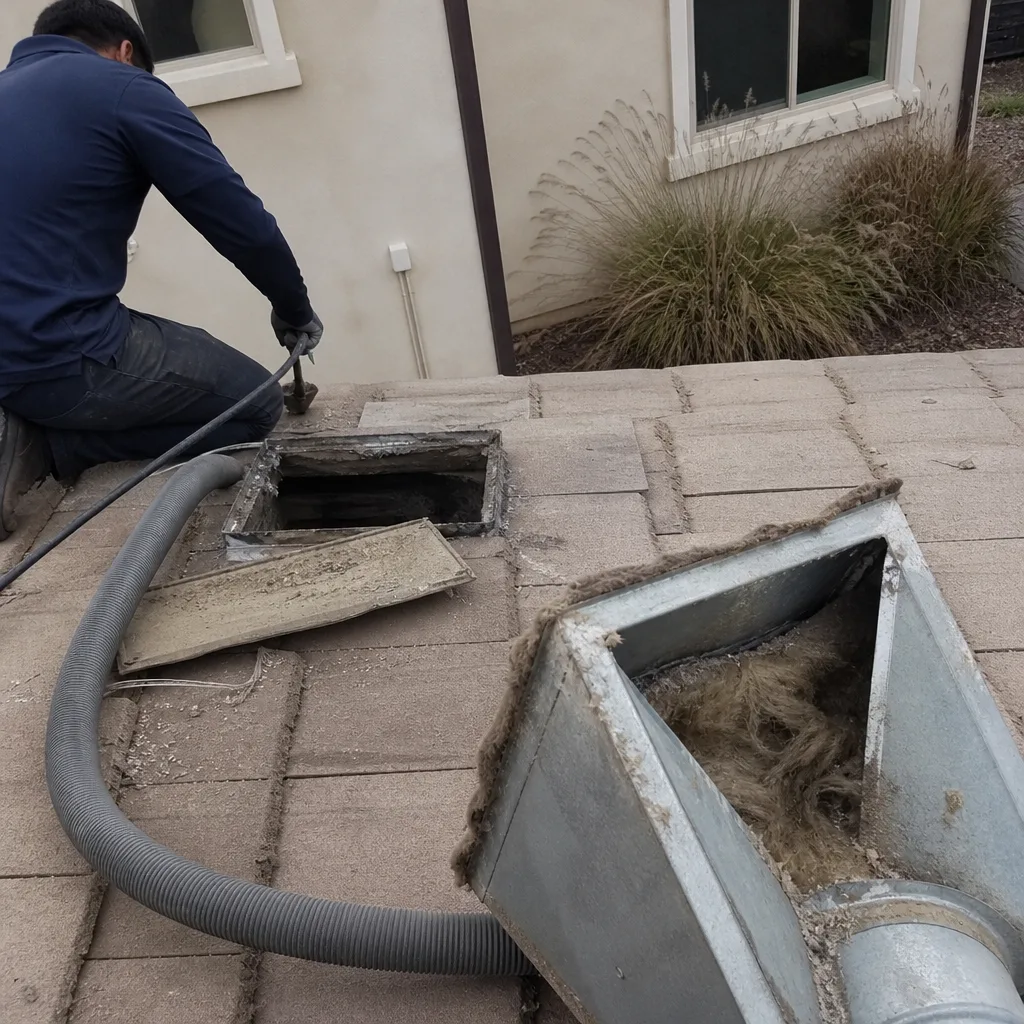 Before
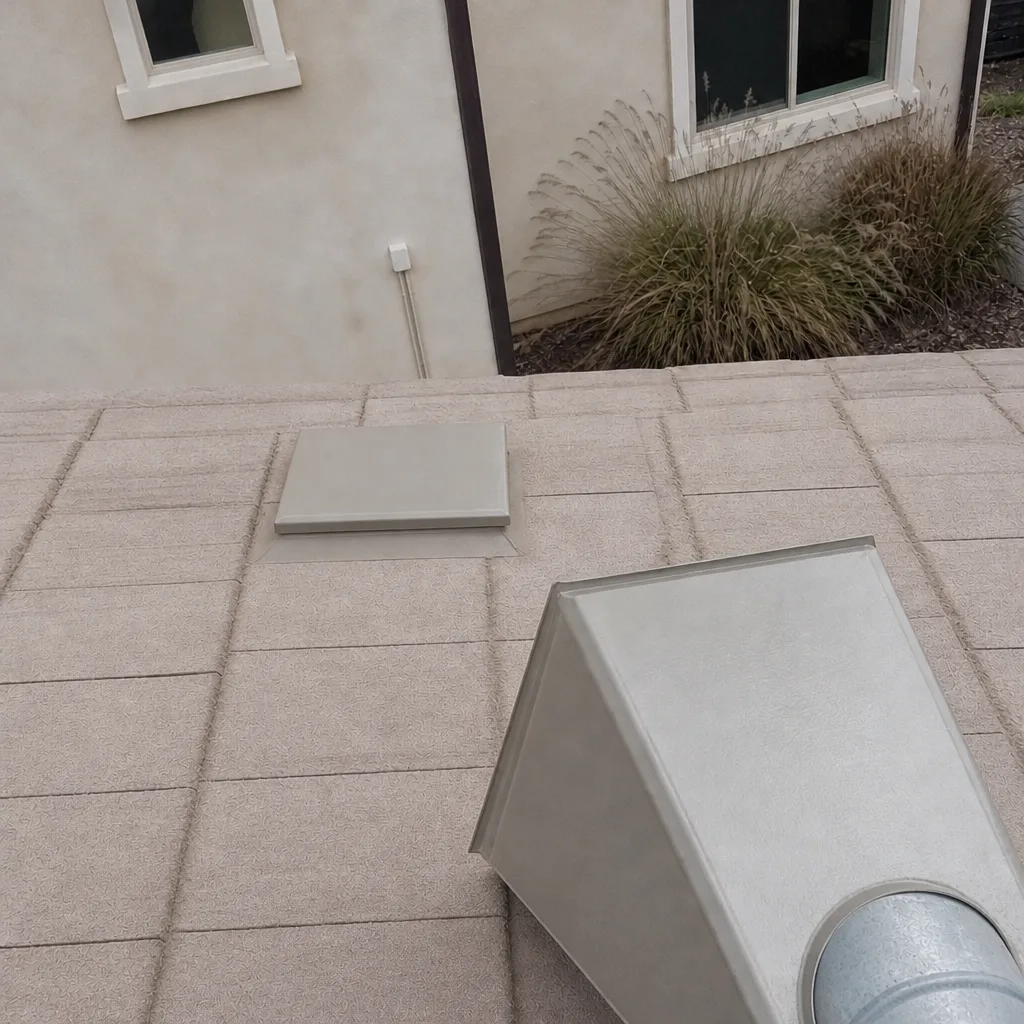 After
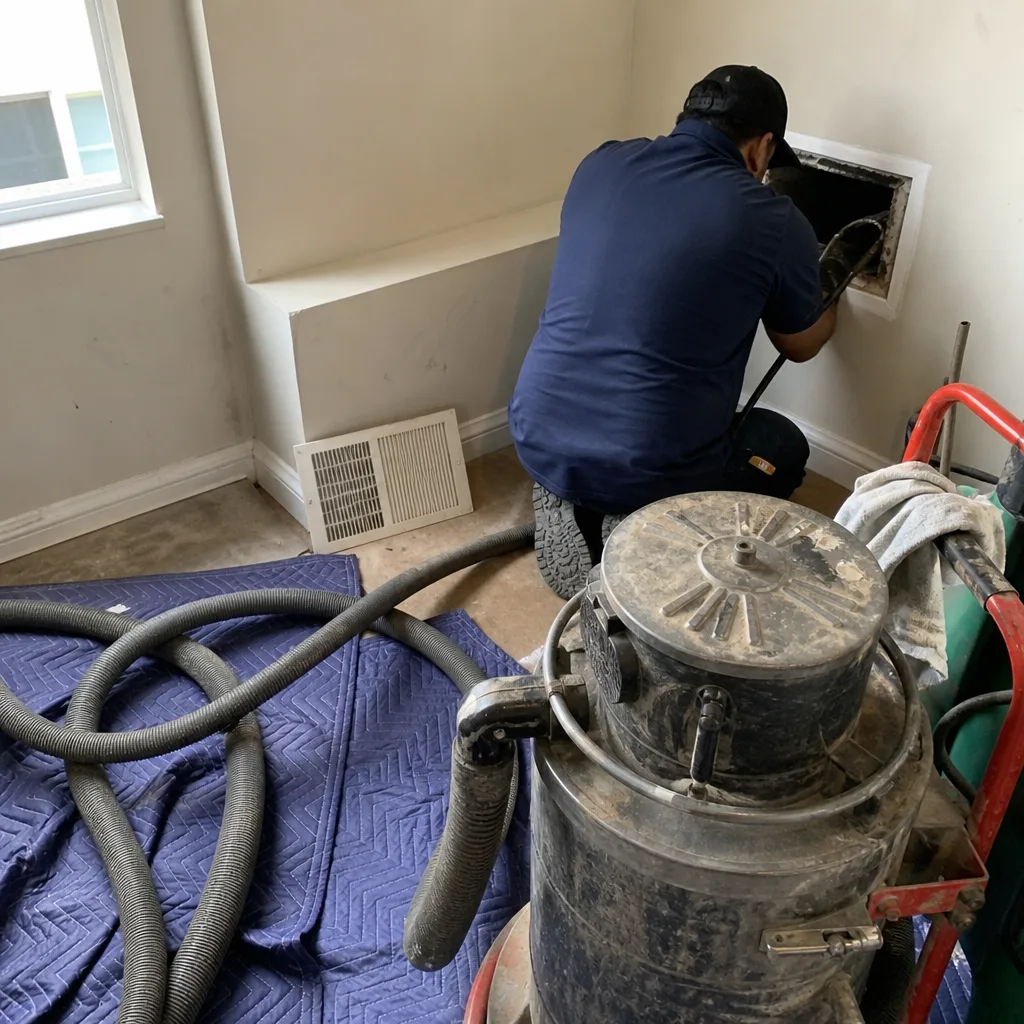 Before
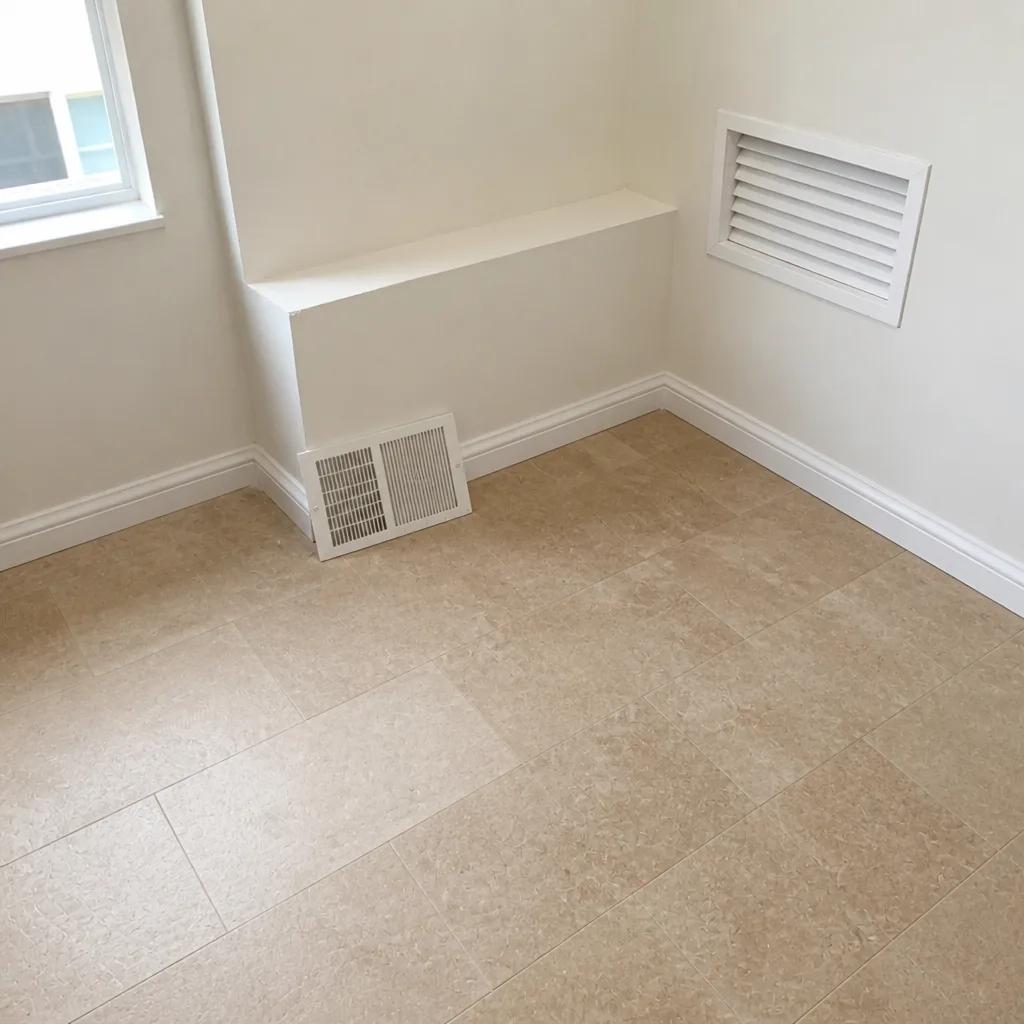 After
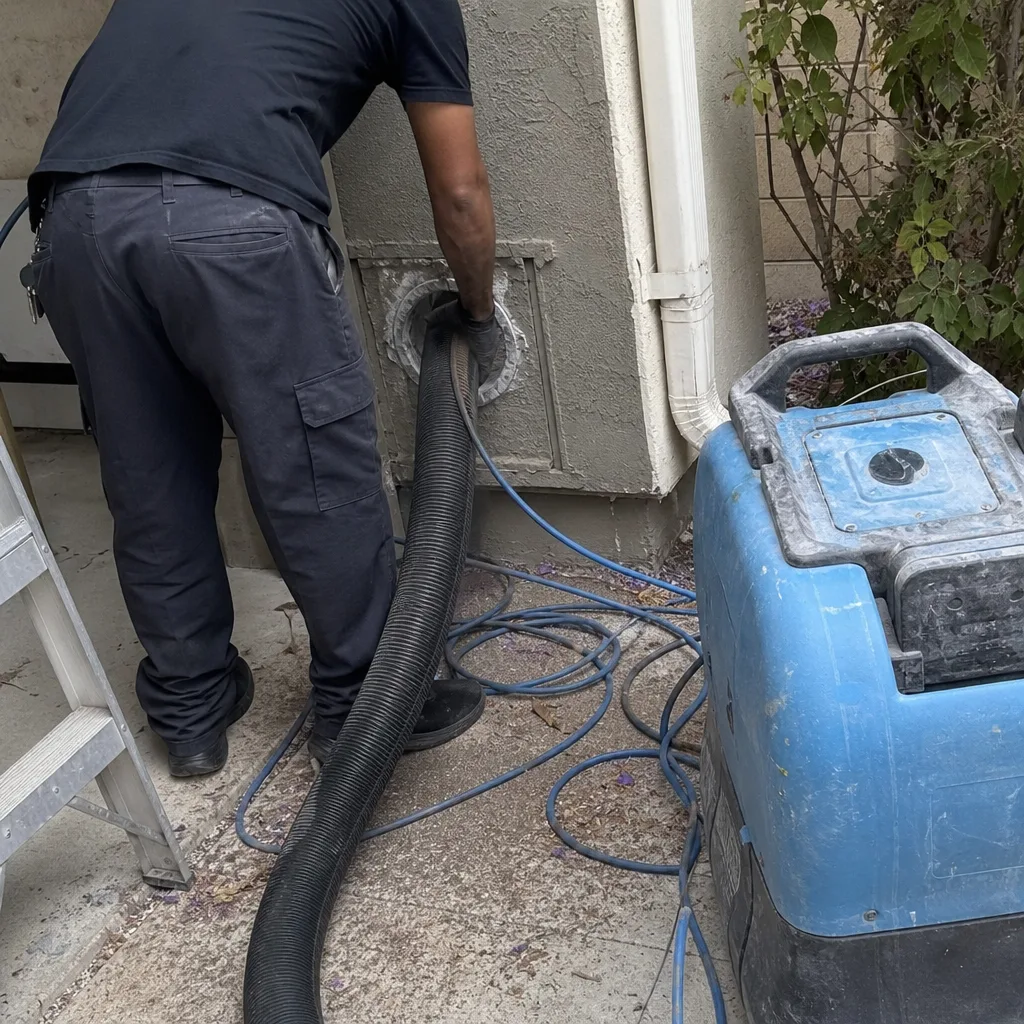 Before
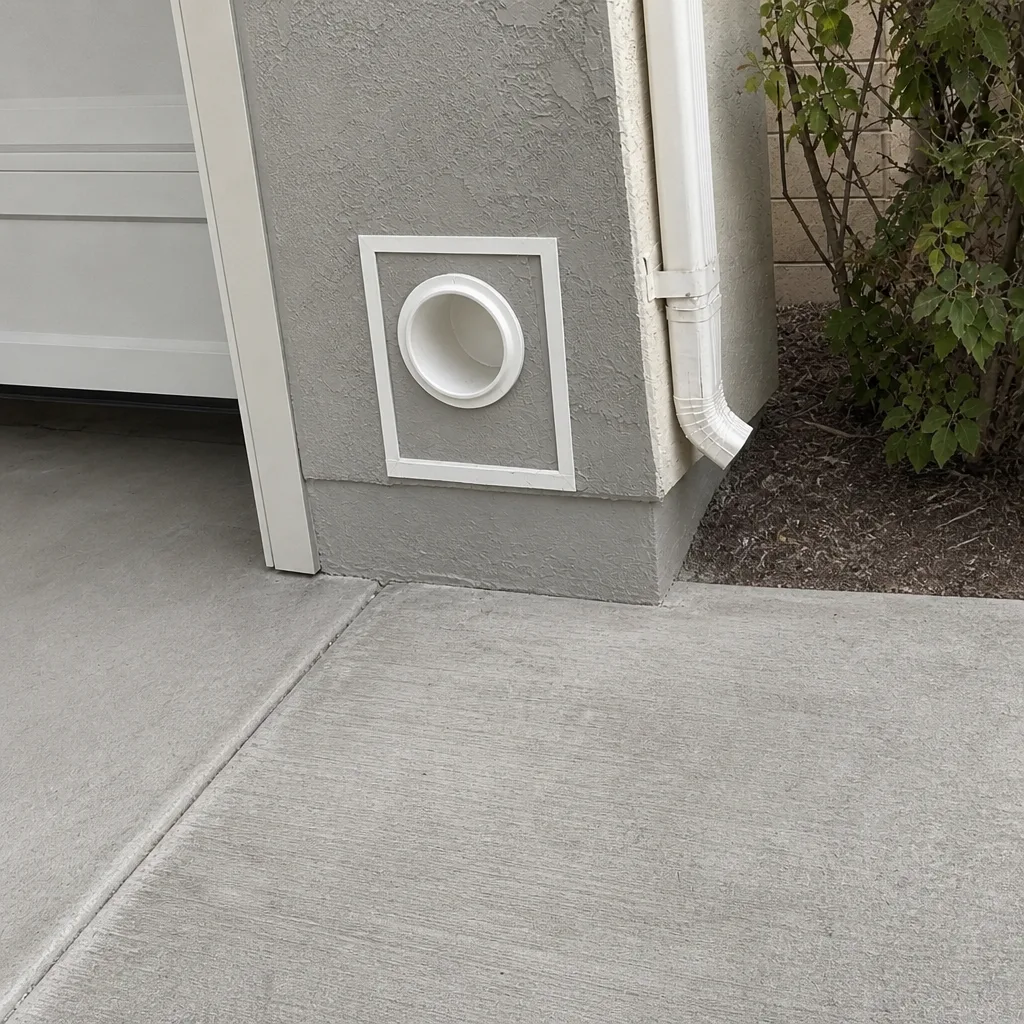 After
When to Call a Professional
Call a professional when two or more warning signs from this guide show up together, when you can see visible contamination in a register boot or on accessible duct surfaces, or when an odor’s pattern is consistent rather than occasional. Call sooner if a post-renovation dust problem hasn’t settled within a few weeks, or if anyone in the house reacts specifically when the system runs. And call before you replace the HVAC equipment on the strength of uneven temperatures; measurement usually costs less than a new system and produces a much more reliable answer. Air Duct Cleaning Portola Springs offers free estimates in Portola Springs. Call (844) 685-3117. We answer 24/7. Fast dispatch from 7am to 7pm, Sunday through Friday.
Frequently Asked Questions
Air duct cleaning in Portola Springs usually runs from a few hundred dollars for a straightforward single-system home to around a thousand for larger homes with multiple systems and heavier contamination. Square footage, the number of systems and returns, and whether sealing or sanitizing is needed all move the estimate. The written estimate sets the final price, and estimates are free. Call (844) 685-3117 for an exact quote.
Most homes need it every few years, not every year, and the deciding factors are filter loading rate, renovation activity, pets, and any moisture history in the system. A house that loads a MERV-8 filter in under three weeks is telling you the interval is shorter. Call (844) 685-3117 and we’ll help you figure out the right interval for your home.
Cheap quotes usually come from a coupon price for a partial service: one trunk line, a quick surface vacuum, or a per-vent calculation that grows once a technician is on site. Professional-grade equipment like Rotobrush and Nikro systems, and Abatement Technologies containment gear on jobs that need it, is what separates a real cleaning from a surface pass. We work with one flat price per system agreed before work starts, with before-and-after photos of your own duct work. Call (844) 685-3117 for a free estimate.
Ask for before-and-after photos of your own duct interiors and registers, taken during the job. Ask which equipment will be used and what the process includes. A specialist should be able to name the system, like a Rotobrush or Nikro setup, and describe the containment. Call (844) 685-3117 and we’ll walk you through exactly what your visit would include.
Often, yes. A 3-5°F gap between rooms usually points to a debris-restricted branch, a collapsed or disconnected flex run, or an unsealed joint pulling air from the wrong place. In Portola Springs homes with tight envelopes and short flex runs, those small restrictions show up quickly. A free estimate will tell you what’s actually going on. Call (844) 685-3117.
A musty smell means moisture is present somewhere in the system, and mold is a possibility that should be checked rather than assumed. It might be a wet evaporator pan, an uninsulated run in a humid space, or interior condensation. That’s a job for an inspection with containment equipment, not a surface cleaning. Call (844) 685-3117 to book an assessment.
The Bottom Line
The duct problems that matter in Portola Springs homes usually show up first as performance signals, not visible contamination. Watch which registers under-deliver, how quickly filters load, which smells appear at system startup, what changed after a renovation, and whether symptoms follow the system or the seasons. Two or three of those signs together are worth a professional inspection, and the inspection is worth more than the cleaning if it finds a leaky or disconnected system that will simply re-dirty. The right sequence is measure, clean, seal if needed, sanitize where indicated, and confirm with photos. Our technicians have up to 10 years of experience with professional-grade equipment, and we’ll show you what we find before we recommend anything.
Call (844) 685-3117 for a free estimate. We answer 24/7. Fast dispatch from 7am to 7pm, Sunday through Friday.
Written by the team at Air Duct Cleaning Portola Springs.