
Last updated November 23, 2026
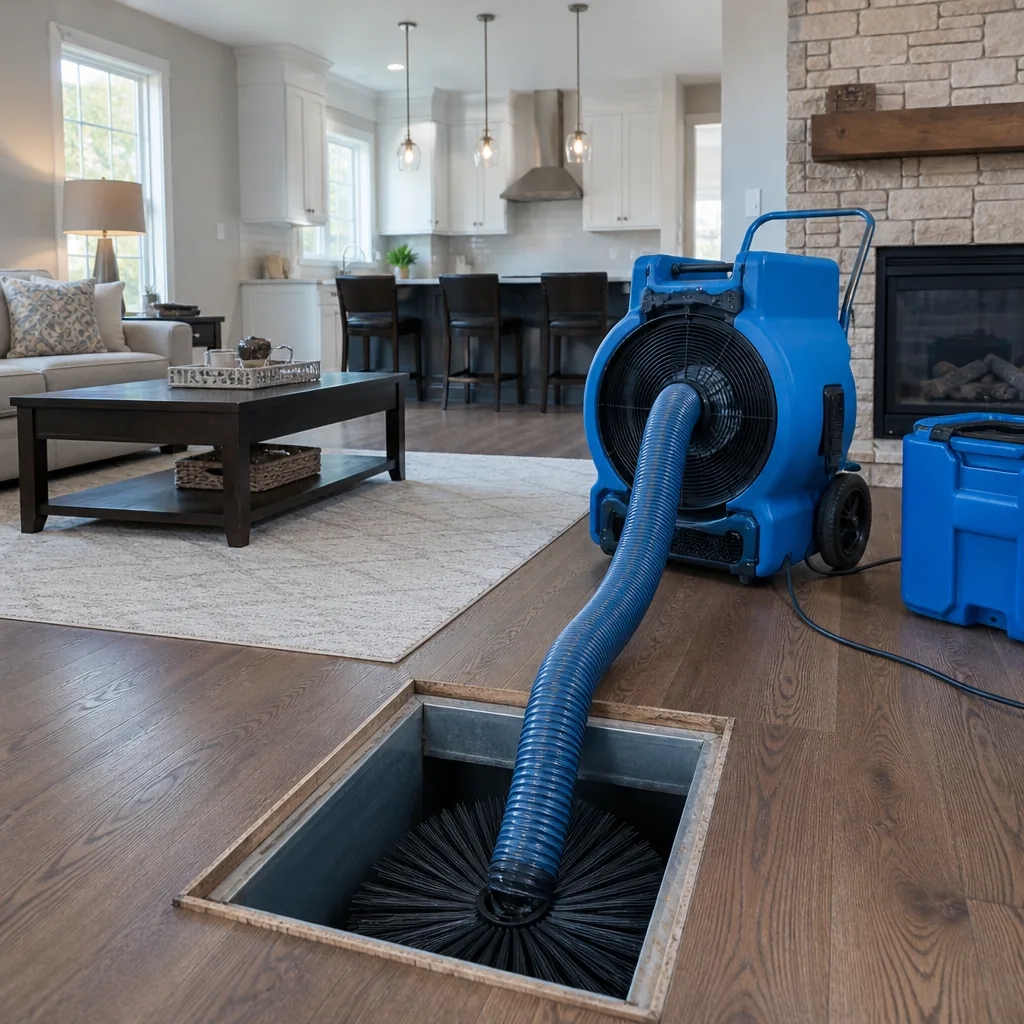 Whole-home duct cleaning
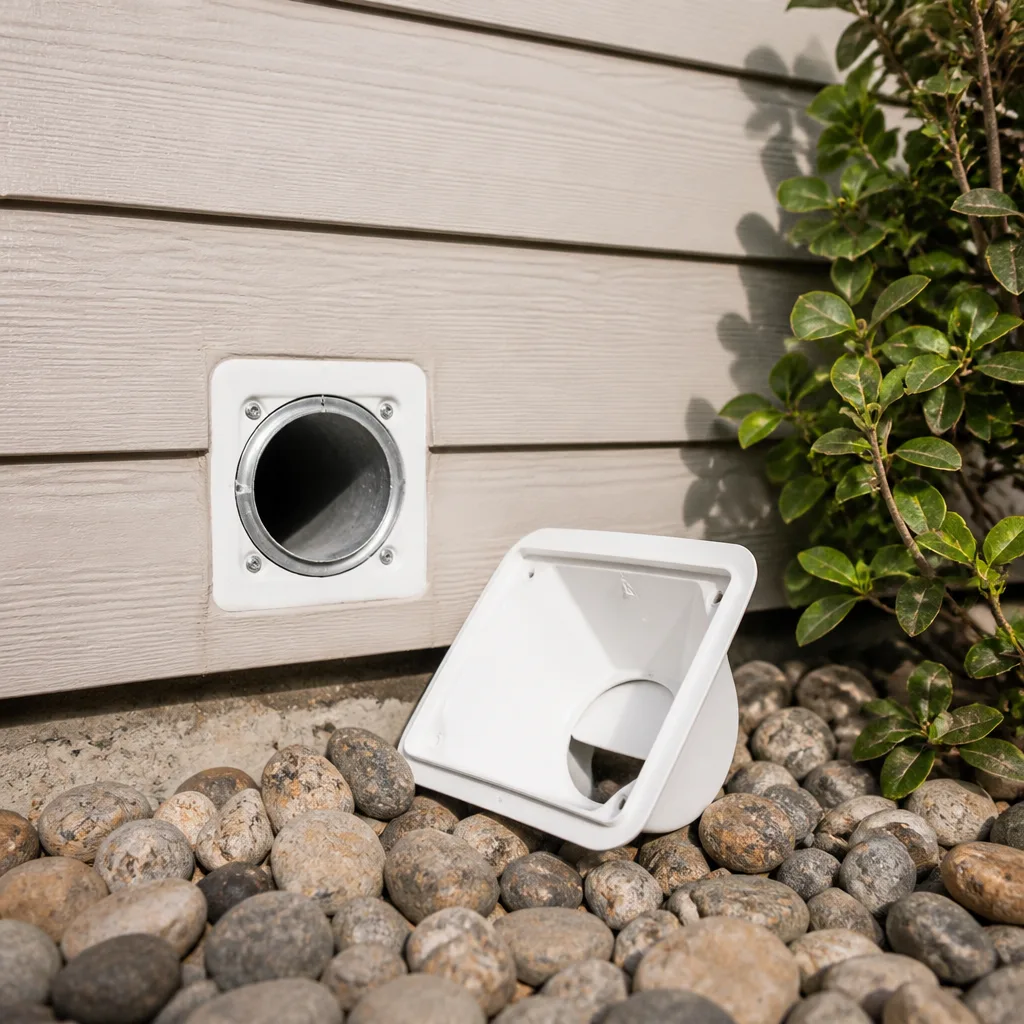 Dryer vent cleaning
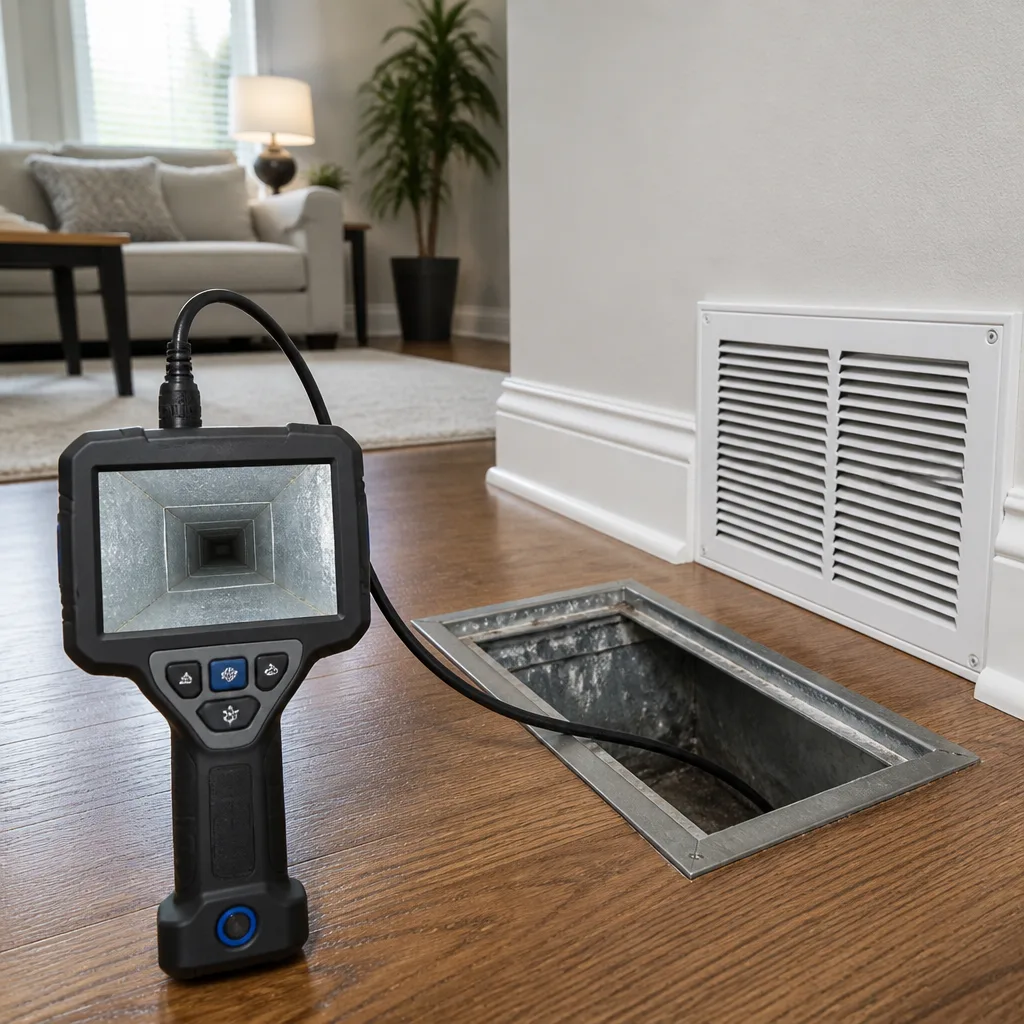 Camera inspection
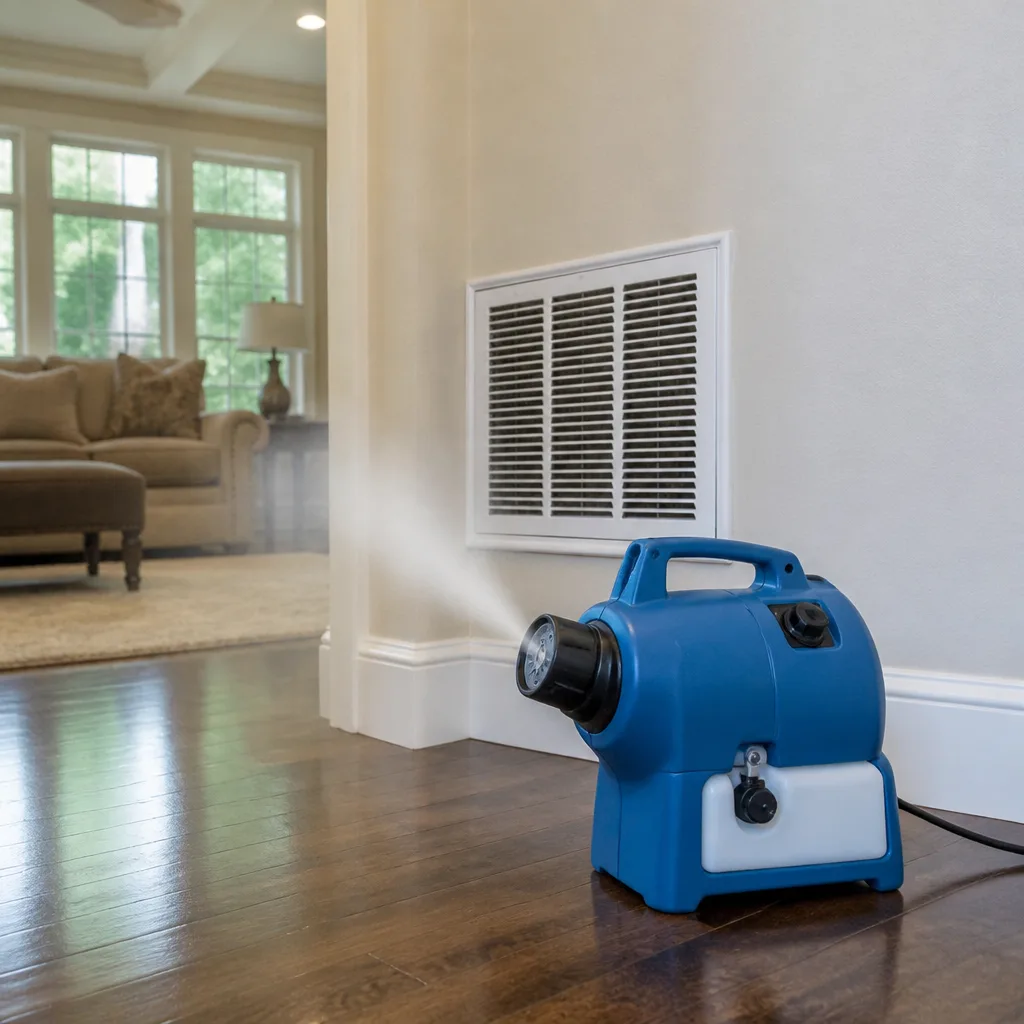 Sanitizing & deodorizing
Whole-system duct and dryer vent check with before-and-after photos - you see exactly what came out of your vents
That "$99 whole-house special" is a bait ad - the real number appears once they are in your hallway, or the "clean" is a shop-vac at the register. We photograph the inside of your ducts before and after instead.
Seasonal Air Duct Cleaning Care for Portola Springs: Year-Round Homeowner’s Guide
Most homeowners clean their ducts once and cross it off a list. In Portola Springs, that thinking misses the point entirely. We have four distinct indoor-air seasons here, and none of them follow the calendar the way they do in most of the country. The first cool night of October does two things at once: it drives families to switch the thermostat to heat, and it arrives right in the middle of wildfire smoke season. That single switch blows months of settled summer dust off every horizontal run and into the rooms your family sleeps in. This guide walks you through what each season deposits into ductwork, what to watch for, and a practical action calendar that matches how Portola Springs actually breathes.
Quick Answer
In Portola Springs, air duct cleaning works best when it follows the four local contaminant seasons rather than a once-a-year habit: pollen and allergen buildup in spring, dense debris packing from continuous cooling in summer, wildfire smoke plus the first heating run in fall, and low-airflow moisture condensation in winter. A full professional cleaning every two to three years, timed around late spring or early fall, handles the bulk of it. Between cleanings, the fall heating switch and any Santa Ana wind event are the moments that matter most for the air inside your home.
Styles & brands we work with
- Whole-home duct cleaning
- Dryer vent cleaning
- Camera inspection
- Sanitizing & deodorizing
Table of Contents
- Why Portola Springs Has Four Air Seasons, Not One
- Spring: Pollen That Settles in Return Plenums and Coils
- Summer: Why Continuous Cooling Packs Debris Into Elbows
- Fall: Santa Ana Winds, Smoke, and the First Heating Run
- Winter: Low Runtime and the Moisture Question
- Your Portola Springs Seasonal Action Calendar
- What a Seasonally Timed Cleaning Actually Involves
- Common Mistakes to Avoid
- When to Call a Professional
Why Portola Springs Has Four Air Seasons, Not One
Temperature is not what drives indoor air quality in Portola Springs. Wind events, pollen cycles, HVAC mode switches, and regional wildfire risk do. Each of those forces loads a different category of contaminant into the same duct system, and each one needs a different response.
Think about how many hours a day your system moves air. In January, a Portola Springs house might run its HVAC for a couple of hours total. In August, the same system runs through the afternoon and into the evening, pulling thousands of cubic feet of air per minute through the same filter and the same duct walls. That difference alone changes how much debris collects and where it concentrates.
Then add the outdoor forces. The Inland Empire carries some of the highest spring pollen loads in the region, and Portola Springs sits on the receiving end of that airflow. Fall brings Santa Ana wind events that push regional smoke into the valley, right as families switch to heat for the first time in months. Winter quiets the system down, which is its own problem: low airflow means less drying and different moisture dynamics inside the ducts than during cooling season.
The practical takeaway is that a single annual cleaning date does not serve a Portola Springs home the way a seasonal plan does. You want a baseline clean, then the flexibility to respond to smoke events and mode switches as they happen. That is the framework the rest of this guide builds on. For the full scope of what a professional cleaning covers, see our Air Duct Cleaning Portola Springs page.
Spring: Pollen That Settles in Return Plenums and Coils
Spring pollen in Portola Springs does not stay outside. Your return air path is the entry point. Every time the system runs, return ducts pull household air back toward the air handler, and the negative pressure at the return grille draws in whatever is floating near it: fine pollen, dust from open windows, and the light debris that settles on every horizontal surface in the house.
Two locations collect the bulk of it:
- The return plenum. This is the large duct section where return air gathers before it reaches the blower. Because it moves slowly and sits at low pressure, fine particles drop out of the airflow and settle on the bottom surface. Spring pollen is small enough to stay suspended a long time, which means more of it reaches the plenum than larger dust would.
- The evaporator coil. The coil is wet during cooling season, and a damp surface catches pollen the way a screen catches lint. Once pollen and dust build on the coil fins, airflow drops and the coil has to work harder to move the same amount of heat. That matters in Portola Springs because spring afternoons already start the cooling cycle.
What to do in spring:
- Swap the filter for a fresh one at the start of the pollen season rather than waiting for the calendar reminder.
- Keep return grilles clean and unobstructed. Furniture and rugs pressed against a return grille starve the system and pull debris toward it.
- Watch for a musty or dusty smell when the fan starts. That smell often traces back to a loaded coil or a settled return plenum.
- If the system has not had a full cleaning in more than two years, schedule one before cooling season starts running hard.
Spring is also the best window for a first deep clean. Getting the plenum and coil clear before summer keeps the whole system moving freely when it matters most.
Summer: Why Continuous Cooling Packs Debris Into Elbows
Summer does something to ductwork that no other season does: it runs the system long enough and hard enough that debris gets physically compacted into place. Continuous cooling in Portola Springs means sustained airflow through every branch line for hours a day, and airflow carries particles to the places where it slows and turns.
Those places are the elbows and transitions. A duct elbow is where airflow changes direction, and particles with any mass get pushed to the outside wall of the turn. A transition is where duct size changes, and the turbulence at that spot deposits material the same way a river drops sediment where it slows. By August, an elbow that collected light dust in May can hold a dense mat of debris that reduces the effective diameter of the duct.
Reduced effective diameter means more resistance. More resistance means the blower pushes harder for the same result. In a Portola Springs home with a long branch run to an upstairs bedroom, that often shows up as that room never quite keeping up with the thermostat setting on a hot afternoon. Homeowners often blame the unit. Sometimes the ductwork is the bottleneck.
A few signs worth checking in summer:
- Rooms that cool less effectively than they did in past summers.
- Visible dust streaks around supply registers.
- A musty smell that gets stronger the longer the system runs.
- Filters loading up faster than usual.
Summer is often the season when a stuck damper, a crushed flex run, or a leaking joint shows itself. If you notice any of the signs above, a proper air duct cleaning combined with an inspection of the duct runs will tell you quickly whether the problem is dirt, damage, or both.
Fall: Santa Ana Winds, Smoke, and the First Heating Run
Fall is the highest-risk indoor air season in Portola Springs, and it stacks two hazards on top of each other. The first is regional wildfire smoke pushed in by Santa Ana wind events. The second is the first heating run of the year, which blows months of settled summer dust through every room in the house.
Smoke particles are small enough to pass through most standard filters and settle anywhere in the duct system. Once they are inside, turning on the system stirs them back into the air supply. That is why a smoke event followed by a heating switch can produce a spike in indoor particle levels.
The heating switch adds its own problem. In cooling mode, air moves through the supply ducts at a certain volume and temperature. In heating mode, the air that sat in those ducts all summer gets pushed out on the first cycle. That stale air carries the accumulated dust from three months of static conditions. Many homeowners notice the smell within the first hour.
What to do before the first heating run:
- Change the filter before you switch to heat, not after.
- Run the fan only for 20 to 30 minutes on the first cool day to clear the ducts before the burner or heat pump engages. This flushes the standing air and dust out through the returns.
- Check the return grilles for visible buildup, especially in homes near open space or hillside corridors where wind events carry more outdoor particulate.
- If a smoke event has occurred during the season, schedule a cleaning before the first heating run rather than waiting for spring.
For homes that run a heat pump or forced-air furnace, this fall routine takes ten minutes and makes an obvious difference to how the first week of heating smells and feels.
Winter: Low Runtime and the Moisture Question
Winter is the quiet season for HVAC in Portola Springs, and quiet has its own consequences. When the system runs less, it also dries the ducts less. Moisture that condensed during cooling season can linger in certain duct configurations, and that is where problems start.
Certain layouts are more prone to winter moisture issues:
- Ducts in unconditioned attic space. Temperature swings between the attic and the living space can produce condensation on duct surfaces, particularly at joints and insulated transitions.
- Long, slow branch runs. Runs that are undersized or full of debris move air slowly, which gives moisture more time to settle on duct walls.
- Flex duct with sagging sections. A low spot in flex duct collects moisture and dust together, and that combination is the most likely place for biological growth to start.
What to monitor in winter:
- A musty or earthy smell that appears when the system starts, especially after rain.
- Visible condensation or water staining at supply registers or duct joints.
- Condensation on windows that gets worse over the season.
- Any return grille that feels damp or shows dark spotting.
If you notice any of these, a professional inspection matters more than a cleaning alone. Moisture in ductwork is a sign the system may need sealing or insulation work to solve the root cause. Cleaning it and leaving the moisture source in place only delays the return of the problem.
Your Portola Springs Seasonal Action Calendar
This is a working calendar, not a general list. It ties each action to the outdoor and indoor conditions that actually show up in Portola Springs.
- Late February / Early March – Pre-pollen filter change. Swap the filter before the Inland Empire pollen season peaks. Check return grilles for visible buildup.
- March through May – Spring deep clean window. Schedule a full system cleaning if the last one was more than two years ago. This is the ideal time to clear the return plenum and coil before summer loading.
- June – Coil and system check. Inspect the coil for pollen and dust buildup. Verify no branch runs have pulled loose or crushed.
- July through September – Mid-summer filter checks. Filters load faster in continuous cooling. Check monthly, replace as needed. Note any room that no longer keeps up with the thermostat.
- September – Pre-heating cleaning if smoke season has been active. If any wildfire smoke event has affected the area, clean before the heating switch.
- October – The heating switch. Change the filter, run the fan for 20 to 30 minutes before engaging heat, and note any unusual smell in the first hour.
- November through January – Winter moisture watch. Check duct joints and registers for condensation. Investigate musty odors early.
- Any time – Post-event response. After any major Santa Ana wind event or wildfire smoke infiltration, check the filter and grilles, and schedule a cleaning if indoor air has been noticeably worse.
Two cleanings in a two-to-three-year cycle, placed in spring and fall, cover most Portola Springs homes well. Homes with allergy-sensitive occupants, pets, or recent renovation work often benefit from a tighter interval.
What a Seasonally Timed Cleaning Actually Involves
A proper seasonal cleaning is not one pass with a shop vacuum. It is a sequence, and the sequence matters as much as the equipment.
- Assessment. We inspect the supply and return sides, note the duct material and layout, and identify any damaged sections, disconnected joints, or crushed runs before cleaning begins.
- Containment. On jobs with heavy contamination, we use Abatement Technologies filtration equipment to hold dust and fine particulate under negative pressure. That is the same brand used in professional mold and contaminant remediation, and it keeps disturbed debris out of the living space during the job.
- Mechanical agitation. Rotobrush and Nikro systems use rotating brushes and high-volume negative pressure to loosen debris from duct walls and pull it out. This is professional-grade equipment, not a big-box vacuum, and the difference shows in the elbows and transitions where debris packs hardest.
- Component cleaning. The blower, coil, and drain pan are cleaned as part of a full HVAC cleaning. A coil that looks clean on the outside can hold a dense mat of pollen and dust in the fins.
- Sanitizing where warranted. When biological growth or heavy contamination is found, we use Guardsman-line products in the sanitizing treatment for duct interiors.
- Verification. We show before-and-after photos of your ducts so you can see what was removed and what condition the system is in.
- Upgrades in the same visit. If the system needs air quality hardware, we install Honeywell and Aprilaire products as part of the same appointment. That includes filtration upgrades and humidification components where appropriate.
If the inspection turns up damaged or disconnected ductwork, cleaning alone will not solve the problem. We offer duct repair and sealing as a standalone service, which addresses energy loss and re-contamination at the root rather than just clearing the dust. That is the “clean ducts are only half the solution” side of the work.
Dryer vent cleaning fits into the same visit and is worth mentioning here because it is often overlooked. A clogged dryer vent is a leading cause of residential fires, and most seasonal air quality plans do not include it. We fold it into the same appointment when homeowners want it. See our dryer vent cleaning page for the details.
Common Mistakes to Avoid
- Cleaning only the supply side. The return plenum is where spring pollen settles. A cleaning that skips it leaves the biggest deposit in place.
- Skipping the first-run flush after summer. Turning on heat on the first cool October night without flushing the ducts first pushes a full season of settled dust through the house in one cycle.
- Waiting for a visible problem. Most Portola Springs duct issues do not show up as visible dust. They show up as a room that never cools, a musty smell, or a filter that loads faster than it should.
- Buying a bargain-basement cleaning. Per-vent pricing, a coupon that turns into a far larger invoice once the technician is on site, no before-and-after proof: these are the patterns behind most air duct cleaning complaints. Look for a flat price per system agreed before work starts.
- Treating cleaning as a fix for duct damage. A crushed branch run or a disconnected joint will re-contaminate a freshly cleaned system within weeks. Sealing and repair have to be part of the plan.
- Ignoring the coil. Homeowners often clean only the visible ducts and skip the evaporator coil. A fouled coil is the most likely single point of reduced efficiency in the system.
- Cleaning right before a smoke event. If a Santa Ana wind event is forecast, clean after it, not before. Otherwise you clean the ducts and then fill them again within days.
When to Call a Professional
Some signs are clear calls for professional help. If any of the following apply in your Portola Springs home, it is worth getting an inspection rather than waiting for the next scheduled cleaning:
- A persistent musty smell that returns shortly after the system starts.
- Visible dust buildup around registers or return grilles within weeks of a filter change.
- Any sign of moisture or condensation at duct joints, especially in attic-installed ducts.
- A room that has stopped keeping up with the rest of the house.
- Recent wildfire smoke exposure or a heavy Santa Ana wind event in your area.
- Recent renovation work that produced dust, drywall particulate, or debris.
Calling for an estimate costs nothing. Air Duct Cleaning Portola Springs offers free estimates in Portola Springs – call (844) 685-3117. We answer 24/7. Fast dispatch from 7am to 7pm, Sunday through Friday. For homes that need the full picture, our HVAC cleaning service covers the whole system, not just the visible ducts.
See the difference
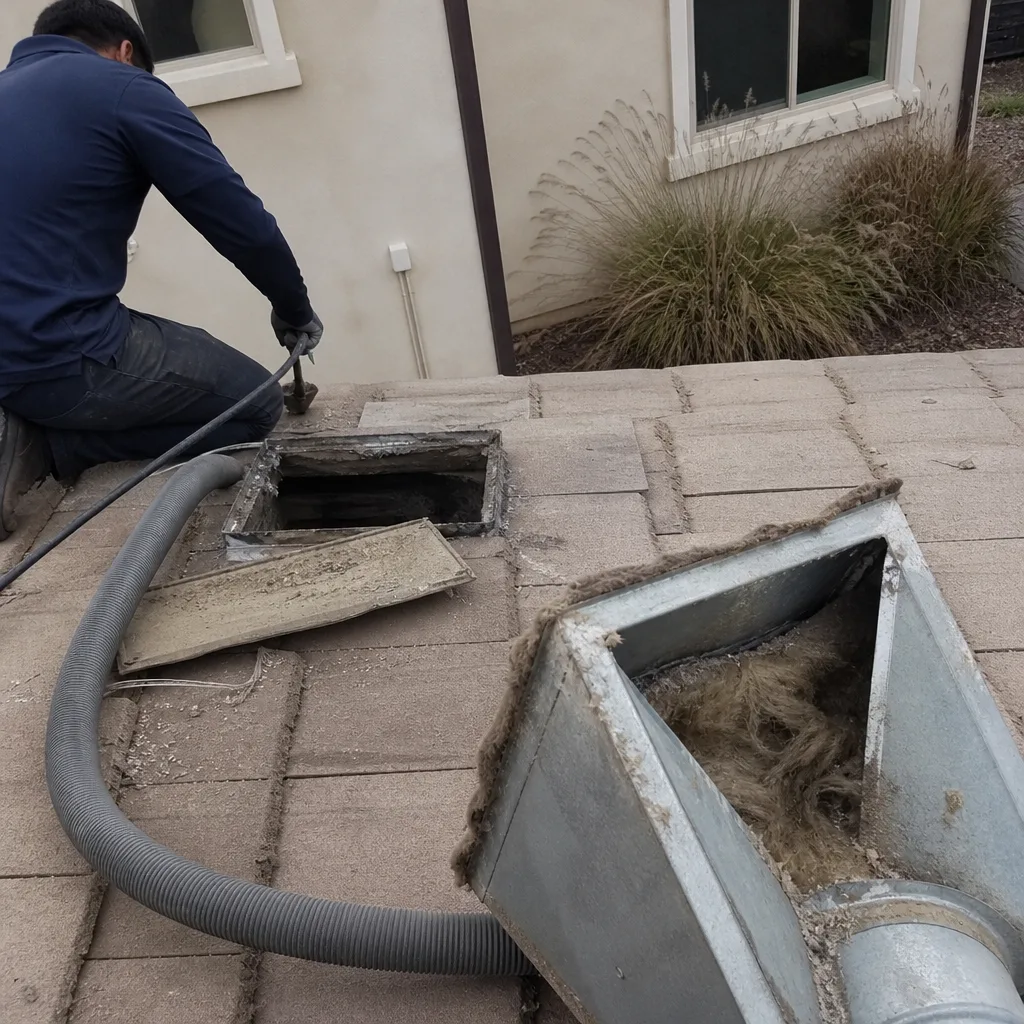 Before
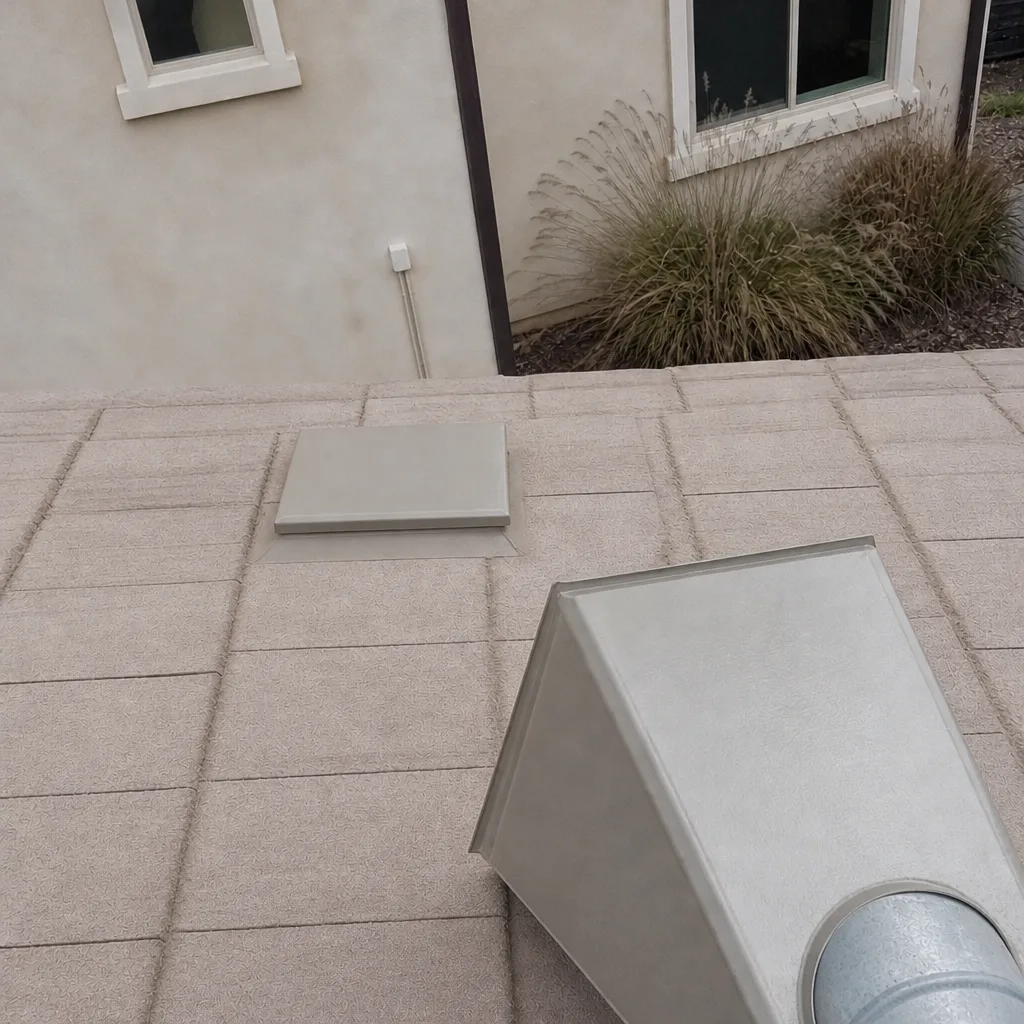 After
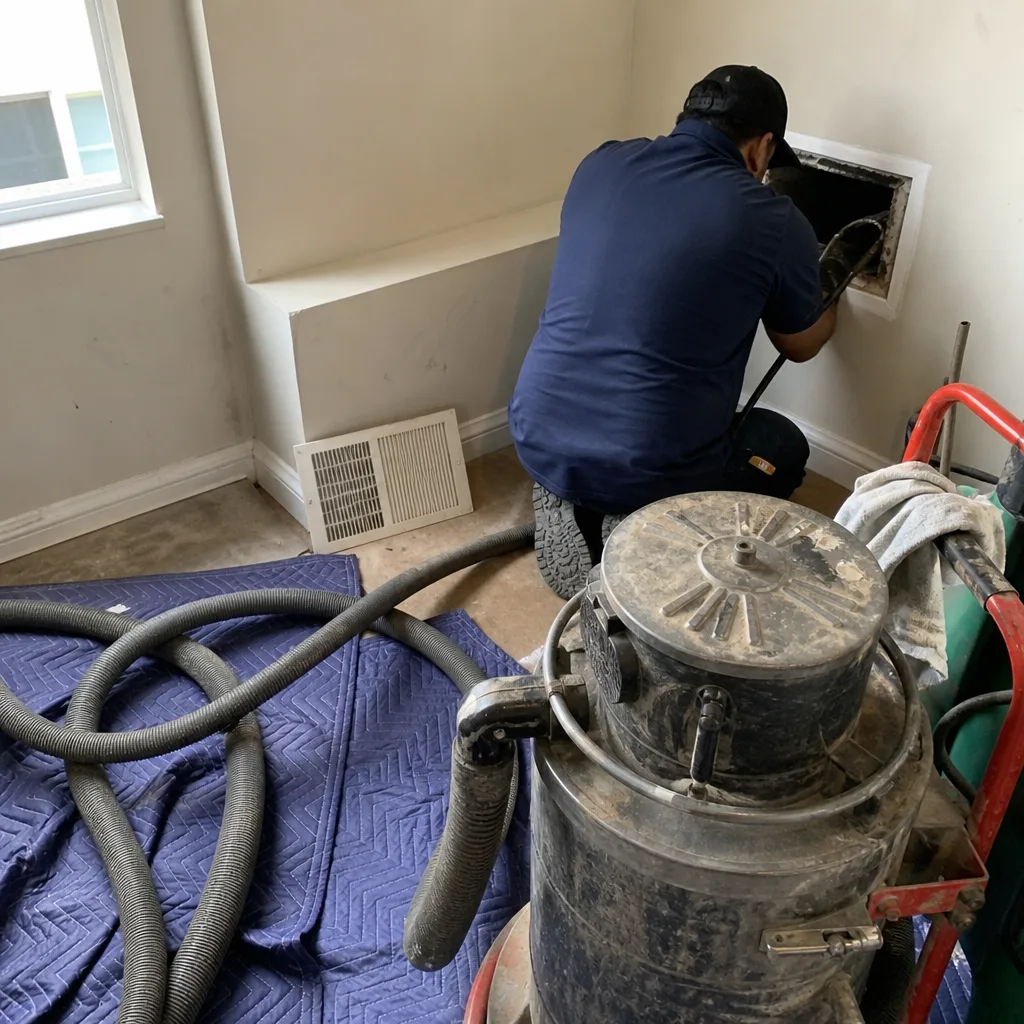 Before
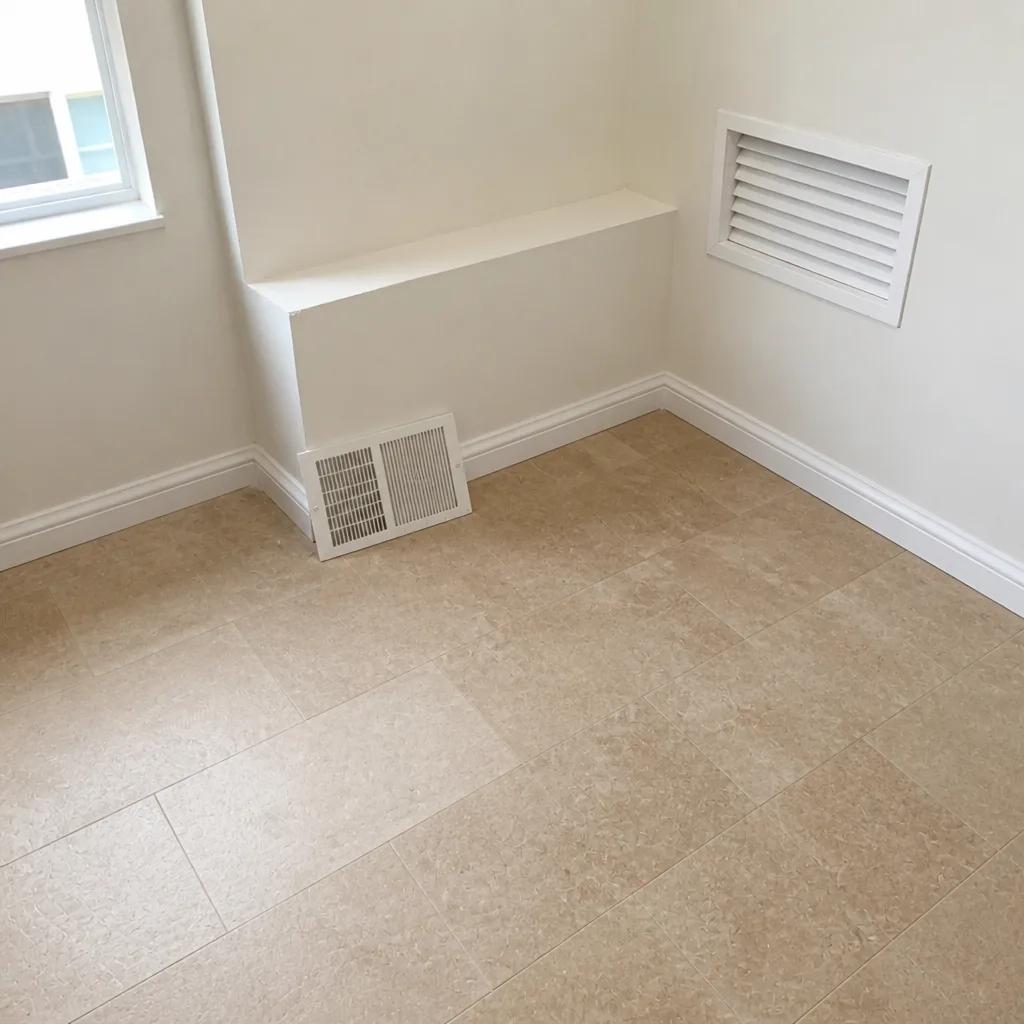 After
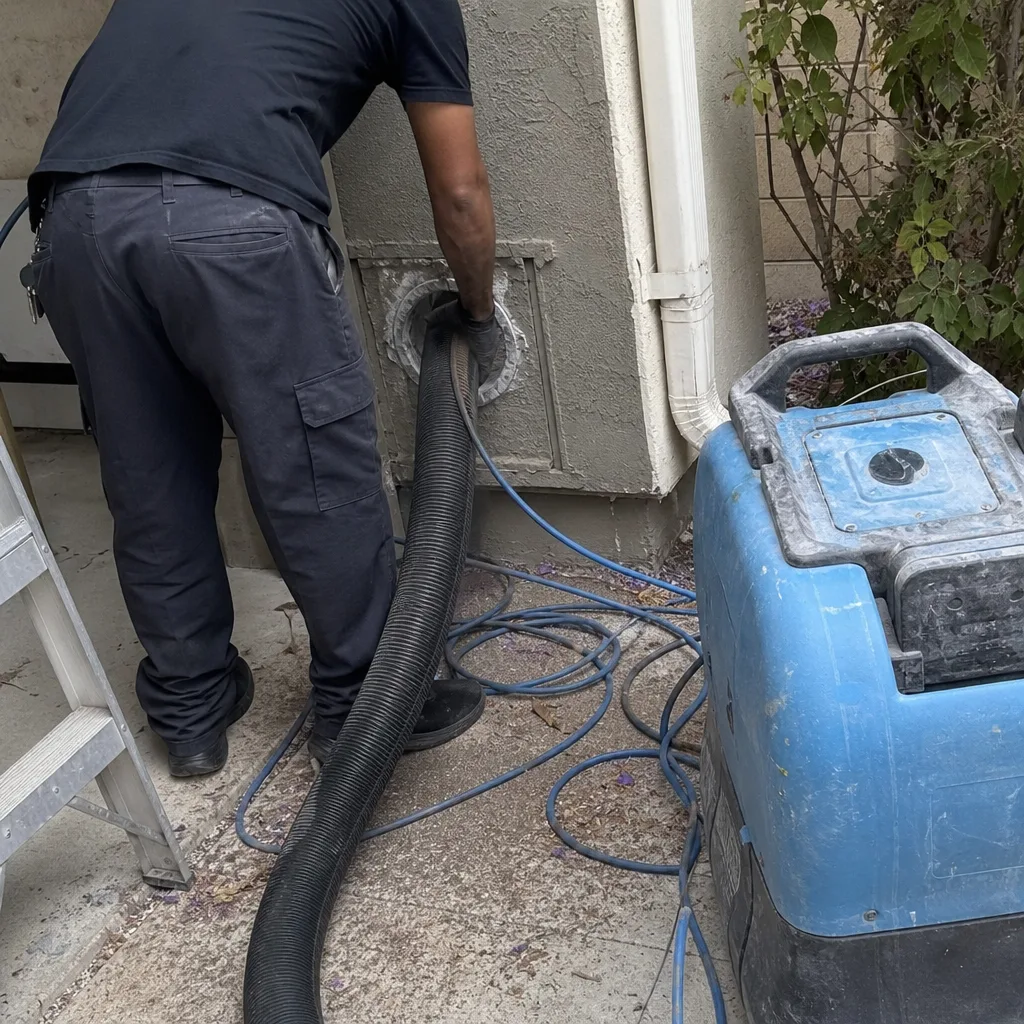 Before
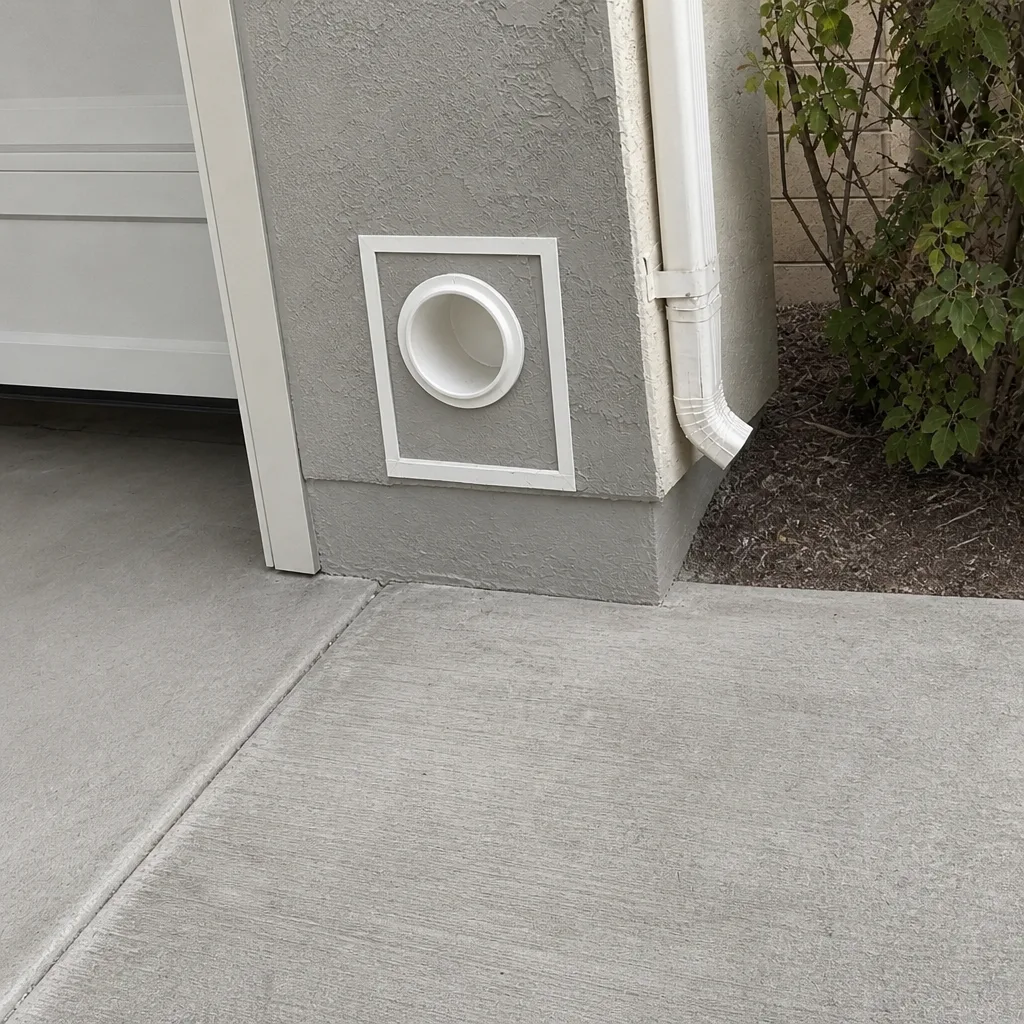 After
Frequently Asked Questions
Every two to three years works well for most Portola Springs homes when the cleaning is timed around spring pollen and the fall heating switch. Homes near open space with higher wind exposure, homes with pets, and homes with allergy-sensitive occupants often benefit from a tighter interval of every 18 to 24 months. Call (844) 685-3117 for a free estimate on your specific situation.
Fall is when Santa Ana wind events push regional wildfire smoke into the valley and simultaneously drive the first heating run of the year. That first run blows three months of settled summer dust through every room in the house. Cleaning before the first heating cycle, or after any major smoke event, makes the biggest measurable difference to indoor air quality.
Yes. The Inland Empire carries high spring pollen loads, and return plenums and evaporator coils collect a significant amount of it. Because pollen particles are small enough to stay suspended in airflow for a long time, more of it reaches the system than most homeowners expect. Check return grilles in May and you will usually see the evidence.
Yes, but timing matters. Clean after a smoke event rather than before, and change the filter when the event ends. Smoke particles are small enough to pass through standard filters, so the ducts and coil often hold residue that only a proper cleaning will remove. Call (844) 685-3117 after any major smoke event and we will quote a full system cleaning.
We use Rotobrush and Nikro duct cleaning systems for mechanical agitation and high-volume debris removal, Abatement Technologies filtration equipment for containment on heavier jobs, and Guardsman-line products when sanitizing is warranted. For air quality upgrades we install Honeywell and Aprilaire components. Naming the equipment matters because the results you get from a professional system are different from what a shop vacuum can achieve. Call (844) 685-3117 for a free estimate and a look at our equipment list.
Winter cleaning is often worth it if you have noticed any musty smell, moisture at duct joints, or a filter that loads suspiciously fast. Winter is the season when low airflow can allow moisture to linger in certain duct configurations, and that is exactly the condition you do not want sitting until spring. Call (844) 685-3117 if you notice any warning signs.
The Bottom Line
Portola Springs does not have one air season. It has four, and each one loads ductwork with a different kind of contaminant. Spring pollen settles into return plenums and coils. Summer’s continuous cooling packs debris into elbows and transitions. Fall stacks Santa Ana smoke on top of the first heating run, which is the single most important seasonal moment for your indoor air. Winter quiets the system down and brings the moisture question with it.
A spring cleaning plus a fall pre-heating response handles most of it. Two things matter more than any single cleaning: clean before the heating switch blows summer dust through the house, and clean after smoke events rather than before. Everything else is a matter of timing and inspection. If any of the warning signs above look familiar, get an expert look before the next season turns.
From our team at Air Duct Cleaning Portola Springs: professional-grade equipment, a flat price per system agreed before work starts, and before-and-after photos so you know exactly what was done. We also clean dryer vents, service full HVAC systems, and install Honeywell and Aprilaire air quality hardware in the same visit. We answer 24/7, and we’ll give you a straight answer about whether your system needs cleaning now or can wait a season. Call (844) 685-3117. We answer 24/7. Fast dispatch from 7am to 7pm, Sunday through Friday.
Written by the team at Air Duct Cleaning Portola Springs.