
Last updated November 23, 2026
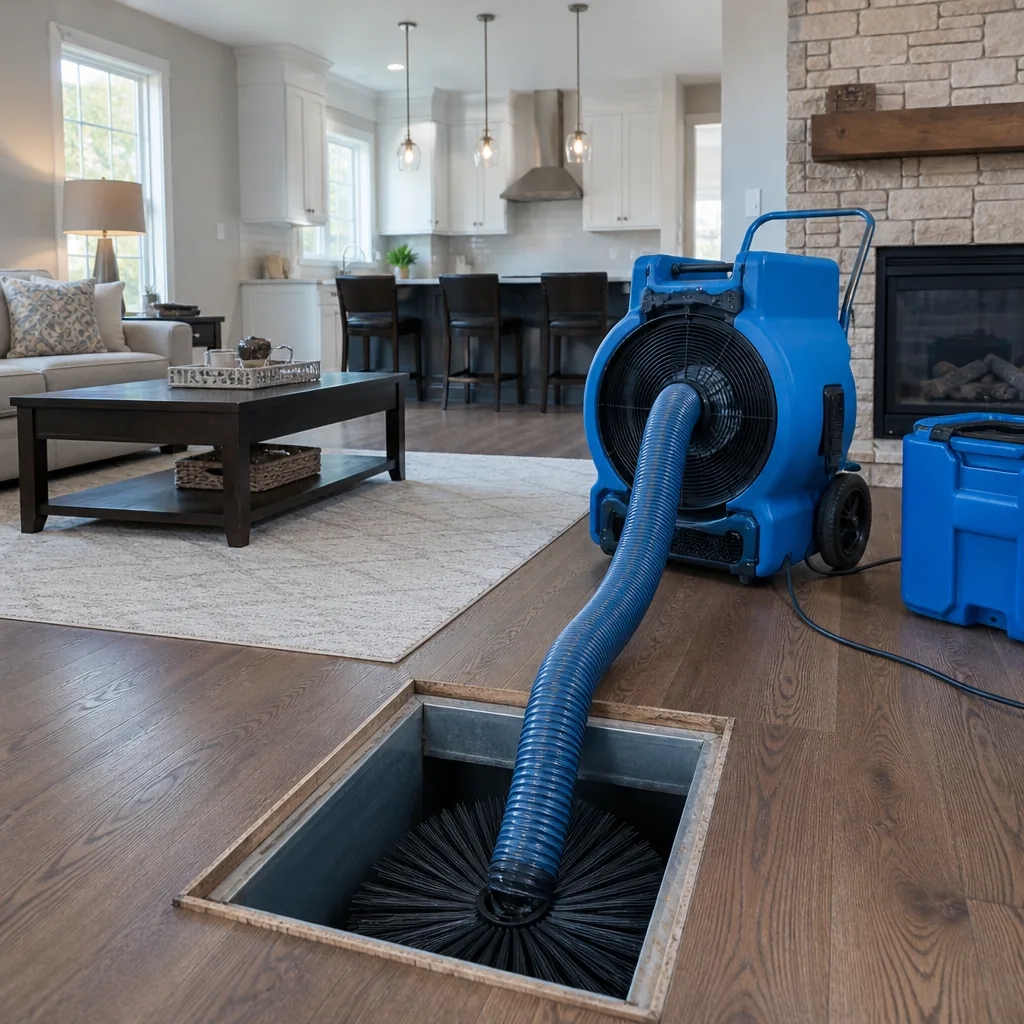 Whole-home duct cleaning
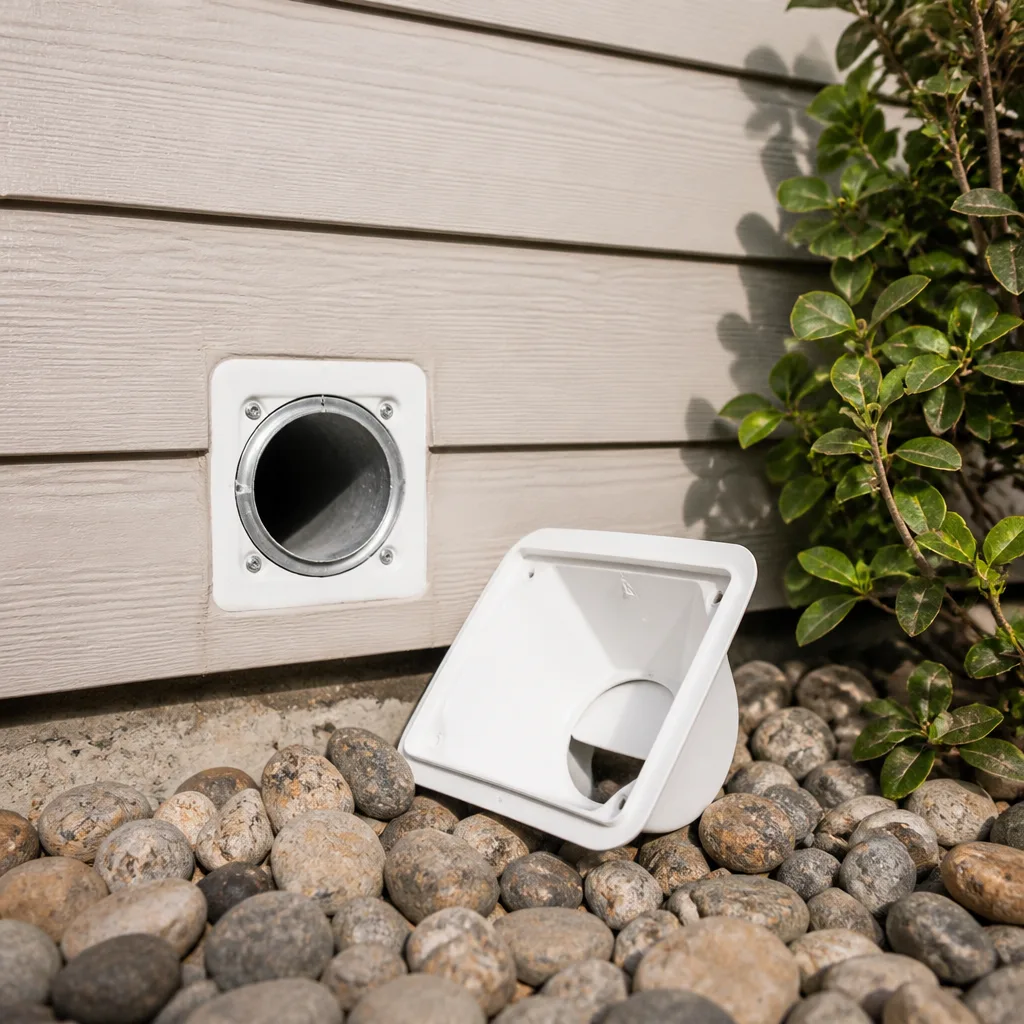 Dryer vent cleaning
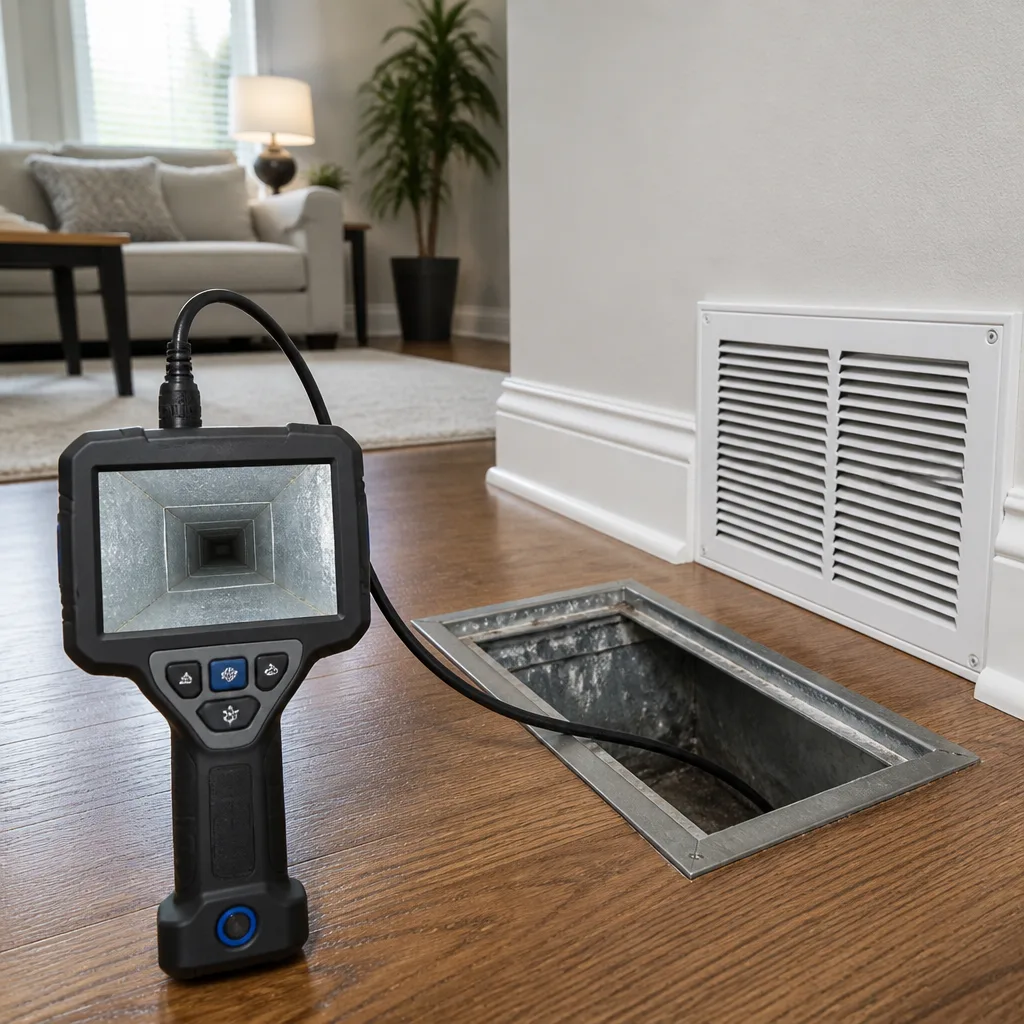 Camera inspection
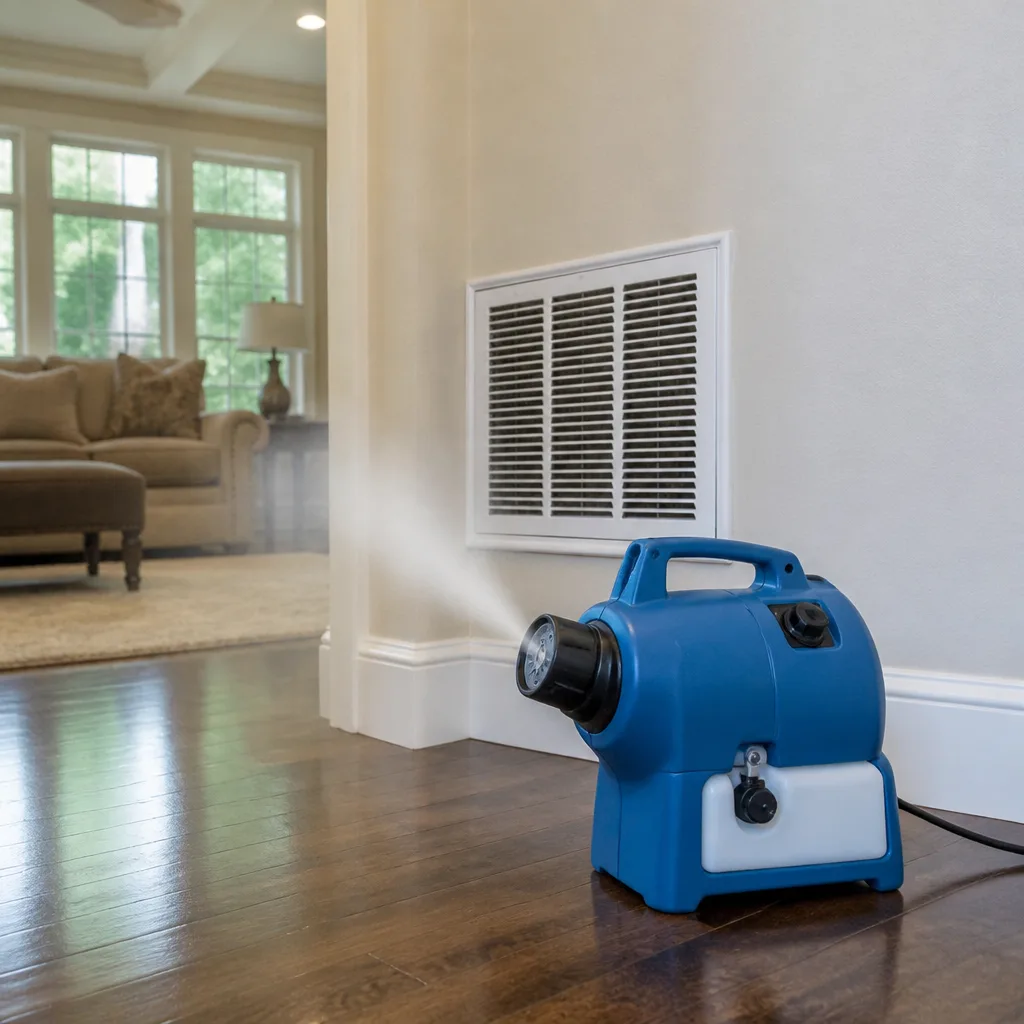 Sanitizing & deodorizing
Whole-system duct and dryer vent check with before-and-after photos - you see exactly what came out of your vents
That "$99 whole-house special" is a bait ad - the real number appears once they are in your hallway, or the "clean" is a shop-vac at the register. We photograph the inside of your ducts before and after instead.
Air Duct Cleaning Emergency Preparedness Guide for Portola Springs Homes
Most Portola Springs homeowners think of duct cleaning as a spring-cleaning chore done when the return grilles turn gray. That assumption is what gets people into trouble. During a regional fire event, when the air quality index in the valley can climb past 150, running your HVAC system on recirculation with an ordinary filter doesn’t protect your indoor air. It concentrates the fine particulates that already slipped inside and pushes them back through your supply ducts, room after room, hour after hour. This guide covers a protocol most homeowners here have never been given: how to set up your HVAC system before a smoke event, what to do with it while the air is bad, and how to verify after the smoke clears that your ducts aren’t still holding onto it. Portola Springs sits close enough to wildfire corridors that this isn’t a hypothetical.
Quick Answer
Before a smoke event, upgrade to a MERV-13 filter (check your system’s rated filter capacity first) and seal obvious gaps around the air handler. During an event, run the fan on recirculation with windows shut, or shut the system off entirely if smoke is already indoors and your filter is under-rated. After the event, smoke odor leaving is not the same as particulate removal; ultrafine ash and PM2.5 settle into duct lining and need HEPA-filtered extraction to leave, which is what professional equipment like our Rotobrush and Abatement Technologies systems are built for.
Styles & brands we work with
- Whole-home duct cleaning
- Dryer vent cleaning
- Camera inspection
- Sanitizing & deodorizing
Table of Contents
- Why Portola Springs Homes Face a Particular Risk
- Pre-Event Protocol: Before Air Quality Turns
- During the Event: HVAC Decisions That Matter
- How Wildfire Ash Deposits Differently Than Household Dust
- Post-Event Assessment: Odor Is Not the Test
- Documentation for Insurance After a Declared Disaster
- Duct Repair and Sealing: Closing the Gaps Ash Exploits
- Air Quality Hardware That Changes the Equation
Why Portola Springs Homes Face a Particular Risk
Portola Springs sits in a part of Orange County where the wildland-urban boundary is close by. Fire weather in the surrounding hills sends smoke plumes over the community, and prevailing winds can hold that smoke against the foothills for days. When that happens, an outdoor AQI reading of 150 or above is a real number homeowners here watch, not a hypothetical.
The housing stock compounds it. Portola Springs is largely newer construction, which sounds like good news for indoor air, and in some ways it is: tight envelopes, modern HVAC layouts, and central return systems that move a lot of volume. But tight envelopes work both ways. A well-sealed home with a properly balanced system pulls air from wherever it can, including gaps in the return plenum or a slightly ajar attic access. Smoke that finds those gaps stays inside because the house doesn’t leak enough to flush it out naturally.
Then there’s the filter question. Many builders install a basic pleated filter with a low MERV rating because it’s cheap and easy on airflow. That filter catches hair and lint. It does not catch the sub-micron fraction of wildfire smoke, which is the part that travels deepest into the lungs and the part that coats duct interiors most aggressively. When a homeowner in Portola Springs runs a system with a basic filter through a smoke event, they’re circulating the smallest, most penetrating particles through every room in the house.
We’ve worked through air quality events in this community, and the pattern is consistent: homes with upgraded filtration and sealed return ductwork come through with far less residual contamination than homes that ran the same system on stock filters. The good news is both of those are fixable, and neither requires an emergency to address.
Pre-Event Protocol: Before Air Quality Turns
The best time to prepare a duct system for smoke season is when the air is still clean. Doing this in advance takes an afternoon and pays off every time the AQI spikes. Portola Springs homeowners who set this up once can repeat the routine in minutes when a fire starts in the hills.
- Confirm your filter slot’s rated capacity. Check the label inside the filter grille or on the air handler door. Most residential systems are rated for a maximum MERV based on static pressure. A MERV-13 filter is a good target for smoke-season filtration, but only install one if your system’s documentation allows it. If the slot is rated for a lower MERV, running a filter it wasn’t designed for can strain the blower.
- Seal the obvious return leaks. Look at where the return duct connects to the air handler and to the return grille. Foil tape and mastic close gaps that pull attic or garage air into the return stream. This is one of the highest-value steps in smoke preparedness, and most homeowners skip it entirely.
- Schedule a duct cleaning before fire season, not after. A clean duct system has less material for incoming smoke to cling to. It also means that when smoke does get in, the deposit is on a clean surface and easier to remove. See our air duct cleaning process for how the pre-season job usually runs.
- Clean the dryer vent as part of the same push. It’s easy to overlook, but a clogged dryer vent is a fire risk in its own right, and dryer vent cleaning is a routine part of household fire-safety prep. It’s also one of five services we handle under one roof.
- Know your system’s fresh-air intake position. If your system has an outdoor air intake for ventilation, find out where the damper is and how it closes. During a smoke event, this is the first thing you’ll want to shut.
During the Event: HVAC Decisions That Matter
This is where most homeowners get it wrong. The instinct during a smoke event is to leave the HVAC running exactly as normal, or to shut everything off and hope for the best. Neither is correct in every case. The right call depends on whether smoke is already inside and what filter you have in the slot.
Run the system on recirculation if:
- You have a MERV-13 filter installed (and your system is rated for it).
- Windows and doors are shut tight.
- The outdoor air intake damper is closed.
- Indoors still smells clean and AQI monitors inside are holding steady.
In this configuration, recirculation is your friend. The filter captures what little smoke has gotten in, and the positive pressure the system maintains keeps new smoke from seeping through gaps. The fan running continuously on low speed helps more than cycling on and off.
Shut the system off if:
- You only have a basic low-MERV filter. Running the system will just redistribute fine smoke particles through every room.
- Smoke is already established inside and you can smell it strongly from the supply registers. The system is actively pulling contaminated air through the ductwork.
- Your outdoor air intake can’t be closed and is pulling smoke directly into the return.
When in doubt during the worst hours of an event, off is safer than on with an inadequate filter. The one thing you shouldn’t do is leave the system running on a fresh-air setting during a smoke event. That configuration pulls unfiltered outdoor air directly into the return duct and distributes it through the house. It’s the fastest way to load a duct system with contamination.
For a fuller picture of how system-level cleaning interacts with seasonal setup, our HVAC cleaning page walks through the component-by-component approach.
How Wildfire Ash Deposits Differently Than Household Dust
Household dust is heavy, visible, and mostly settles on horizontal surfaces where a vacuum can reach it. Wildfire ash behaves differently. It gets moved by air currents, and the smallest fraction of it, the PM2.5 and ultrafine range, doesn’t settle so much as coat.
What that means for a duct system is that the residue from a smoke event tends to accumulate on duct lining, flex duct interior surfaces, and the upstream face of the evaporator coil. It’s the surface the moving air touches, not the surface you can see from a return grille. It builds up in the branch runs and the plenum in a thin, adherent film that ordinary vacuuming doesn’t disturb.
This is also why standard cleaning equipment falls short. A shop vac with a paper filter catches the visible ash but blows the ultrafine fraction straight back into the airstream. Professional duct cleaning relies on HEPA filtration on the extraction side, which captures particles down to the sub-micron range and keeps them trapped rather than re-aerosolized. The equipment matters here. Rotobrush and Nikro systems are built around that principle, and Abatement Technologies equipment brings the same negative-air containment discipline used in mold and contaminant remediation. When we work a post-fire job, the extraction side is HEPA-filtered, and containment matters as much as the agitation on the duct interior.
The practical takeaway for Portola Springs homeowners is that you can’t judge duct contamination by looking at the visible dust. A duct system that looks reasonably clean can still hold a month’s worth of ultrafine smoke residue in its lining.
Post-Event Assessment: Odor Is Not the Test
The most dangerous assumption after a fire event is that the problem is solved when the smell goes away. Odor dissipates on its own schedule, driven by ventilation and time. Particulate contamination in a duct system does not dissipate. It stays where it landed until it’s physically removed.
Here’s a simple assessment routine for Portola Springs homeowners in the days after a smoke event. It won’t tell you whether a cleaning is needed, but it will tell you whether it’s worth scheduling one.
- Check for persistent odor on first system startup. Run the fan on its own (no cooling or heating) for ten minutes and notice what comes out of the registers. A faint smoky note that clears in seconds is normal. A strong, ongoing odor at the supply registers after ten minutes suggests contamination in the duct lining or on the coil.
- Look at the return grille filter. Pull the filter and look at its face. If it’s noticeably darker or grayer than usual after a short run, the system has been moving a lot of particulate. That’s a sign the ducts downstream have been working hard too.
- Watch for allergy symptoms that start after the event, not before. If a household member who normally tolerates the indoor air starts reacting in the weeks after a smoke event, particulate load is one possible cause and worth testing.
- Check the evaporator coil. Sludge and residue on the upstream face of the coil is common after a fire event and is one reason system efficiency can drop in the months afterward. Coil cleaning is part of a full Air Duct Cleaning Portola Springs job when the coil needs it.
If all four checks come back clean, you probably don’t need work done. If two or more come back positive, scheduling a post-event assessment is the practical next step.
Documentation for Insurance After a Declared Disaster
When a regional fire event is declared a disaster by the state or federal government, homeowner’s insurance claims often follow. HVAC contamination is sometimes a covered component of those claims. Whether it is depends on your policy, so read it or ask your adjuster rather than assuming. But if you intend to claim, the documentation requirements are the same: gather evidence early, before cleaning.
Here’s what to collect after a smoke event in Portola Springs, in the order it’s easiest to gather:
- Photos of the outdoor conditions. Time-stamped photos of smoky skies from your property establish the event timeline.
- Screenshots of AQI readings. Capture the reading for your area on the worst days, with the timestamp visible.
- Photos of the filter before you change it. A visibly loaded filter is one of the most useful pieces of evidence in a particulate claim.
- A professional assessment documenting the condition of the duct interior and coil. A written assessment with photos taken before cleaning is more defensible than an invoice alone.
- Photos of any interior smoke staining or ash deposits. If you can see staining on walls or ceilings, document it before cleaning.
- Correspondence from your insurer. Save every email and letter; adjusters can change assignments mid-claim.
We can work with your insurer on the assessment side when a post-event job is headed to a claim. We don’t settle claims or promise coverage; that’s between you and your insurer. But a proper pre-cleaning assessment with photos is a document your adjuster can use. When a claim is in play, get the assessment before the cleaning, not after.
Duct Repair and Sealing: Closing the Gaps Ash Exploits
Cleaning a duct system without addressing the leaks that let smoke in is only half the solution. That’s why we offer duct repair and sealing as a standalone service. In the context of fire preparedness, sealing is the root-cause fix. Clean ducts with open gaps in the return plenum and unsealed flex connections will pull smoke in through those gaps on the next event.
Sealing work in Portola Springs homes usually focuses on three places. The first is the return plenum, where the duct connects to the air handler. The second is any flex duct connection at a takeoff or a register boot; these loosen over time and are a common leak point. The third is the connection between the filter slot and the return duct; gaps here bypass the filter entirely, which is why a MERV-13 filter can under-perform in an otherwise well-prepared home.
The benefit in a smoke event is direct. A sealed return system means the smoke outside the house can’t be pulled into the system by pressure imbalance. Over the rest of the year, the same sealing work also reduces energy loss, since leaking return ducts pull hot attic air in the summer and cool air out of the living space. It’s work that pays back on both air quality and efficiency grounds, and it’s worth scheduling in advance of fire season rather than mid-event.
When you’re ready to have a leak assessed, our dryer vent cleaning service is often scheduled in the same visit as a duct sealing job, since the same access panels are already open.
Air Quality Hardware That Changes the Equation
A fire-prepared HVAC system is more than a cleaned duct network and a sealed plenum. The hardware on the inside matters too, especially the filter and any whole-home air quality equipment. Two of the brands we install and service are Honeywell and Aprilaire, both of which offer residential-grade air quality components that go beyond what a stock filter can do.
What kind of hardware is worth considering in Portola Springs given the local fire risk? Three categories come up most often:
- Higher-MERV filter housings. If your current air handler slot can’t physically take a MERV-13, a dedicated filter housing with a higher rated capacity solves that. It’s a hardware change, not a filter change, and it’s a legitimate upgrade for a home that’s going to see multiple smoke events during its occupancy.
- Whole-home filtration with a higher capture rating. Some systems pair a media filter with secondary filtration that captures the finer fraction. Honeywell and Aprilaire both make products in this category. Which one fits your system depends on the cabinet space, the blower capacity, and how your return is configured.
- Fresh-air intake dampers that actually close. A powered damper that shuts during a smoke event (or a manual one you can reach and close in seconds) is one of the most direct mitigations available.
We install and service Honeywell and Aprilaire equipment, which means one visit can cover both cleaning and the hardware upgrade. That matters after an event when time and access panels are limited. Guardsman-line products also come into play in sanitizing treatments for duct interiors once the mechanical cleaning is complete.
Common Mistakes to Avoid
- Running the system on fresh-air mode during a smoke event. It pulls unfiltered outdoor air directly into the return stream and distributes it throughout the house. Close the damper before smoke arrives, and check it’s actually shut.
- Assuming smoke odor leaving means the ductwork is clean. Odor and particulate are separate problems. Odor dissipates; PM2.5 stays on duct and coil surfaces until it’s physically removed.
- Installing a MERV-13 filter in a system that isn’t rated for it. The label inside the filter slot or air handler tells you the maximum MERV. Going over that rating strains the blower and can drop airflow enough to cause other problems.
- Cleaning ducts without sealing leaks. A cleaned duct network with unsealed return plenum gaps will pull smoke in through those gaps during the next event. Sealing is the durable fix in Portola Springs, where events recur.
- Cleaning before documenting for an insurance claim. If smoke damage to HVAC is part of a claim, get photos and a professional assessment before the cleaning starts. Evidence you gather after cleaning is weaker.
- Hiring a generalist with a shop vac and calling it professional duct cleaning. Consumer-grade vacuums don’t have HEPA filtration on the extraction side, which means the ultrafine fraction goes right back into the air. Ask what equipment is being used before booking.
- Ignoring the dryer vent as a fire-risk component. It’s easy to focus on the HVAC ducts after a fire event, but dryer vent cleaning is a fire-safety measure that belongs in the same household safety routine.
See the difference
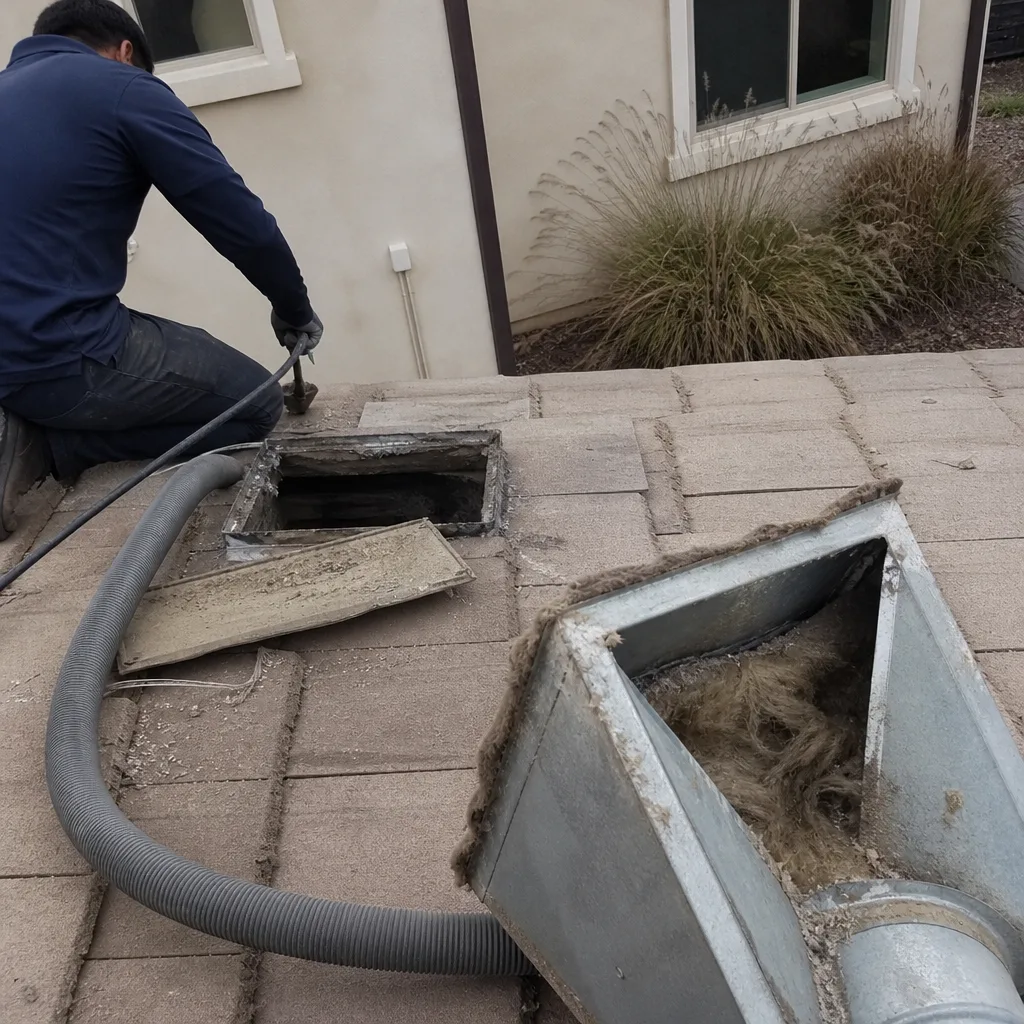 Before
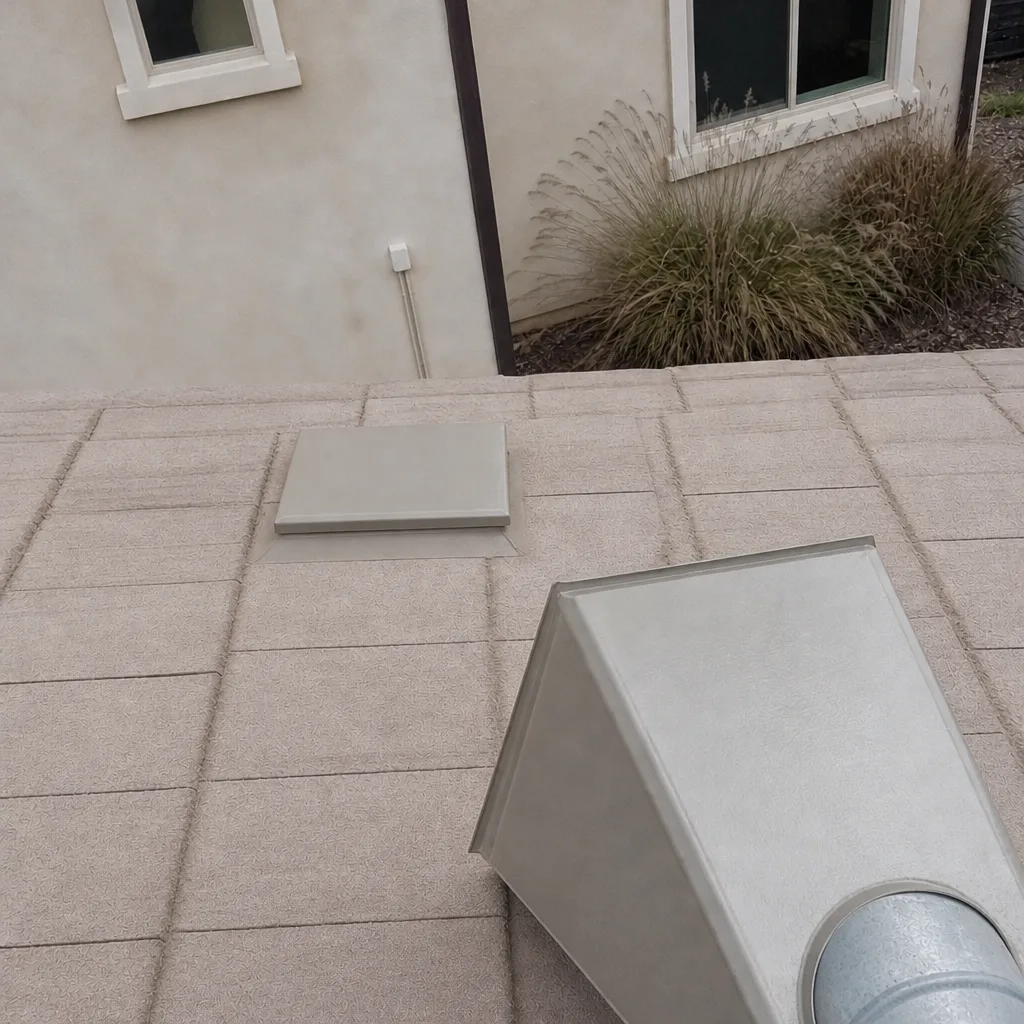 After
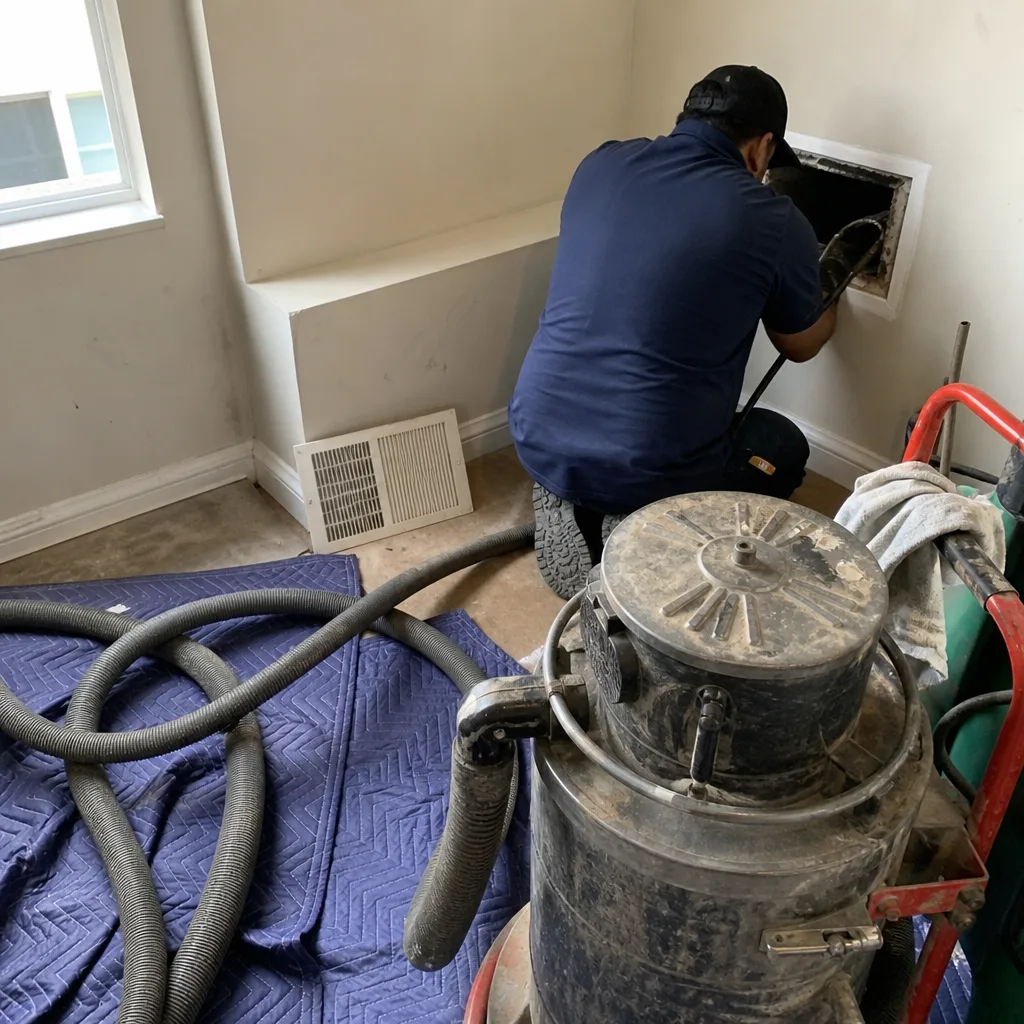 Before
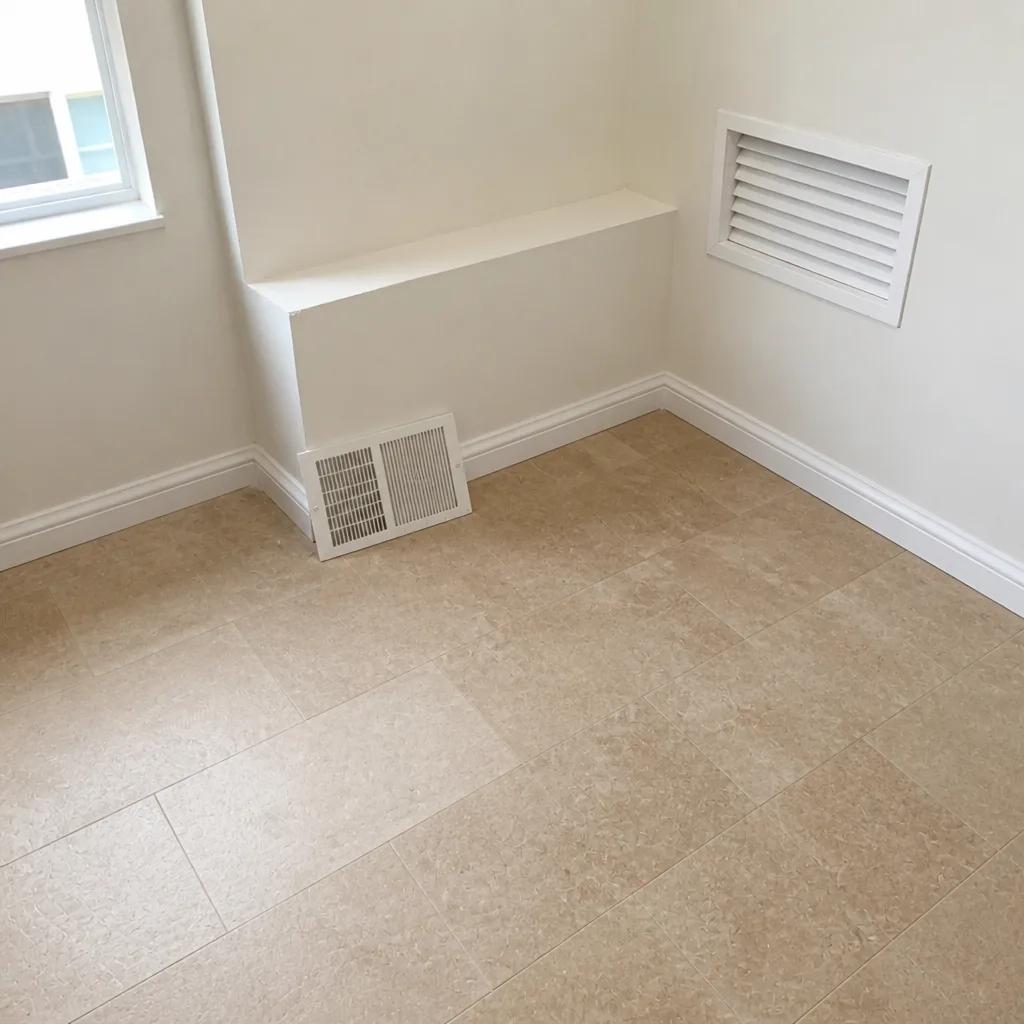 After
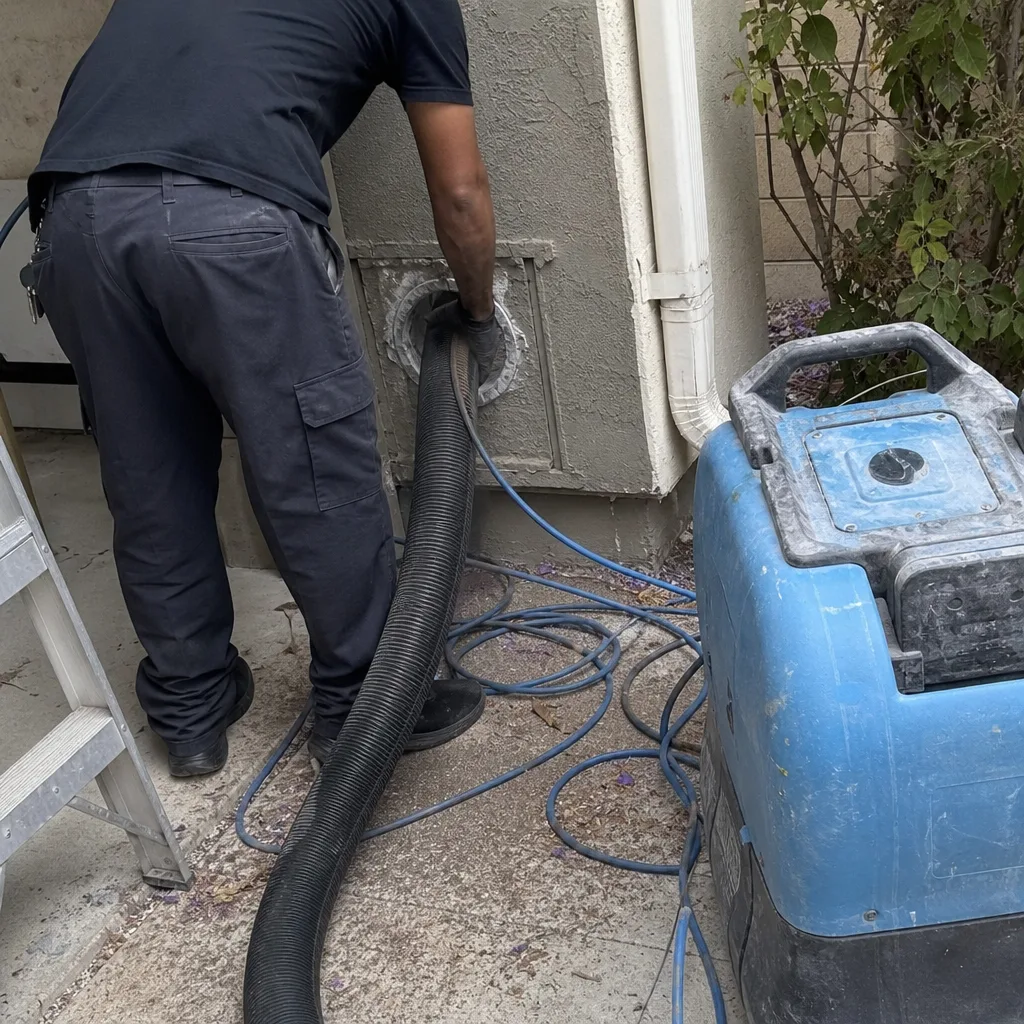 Before
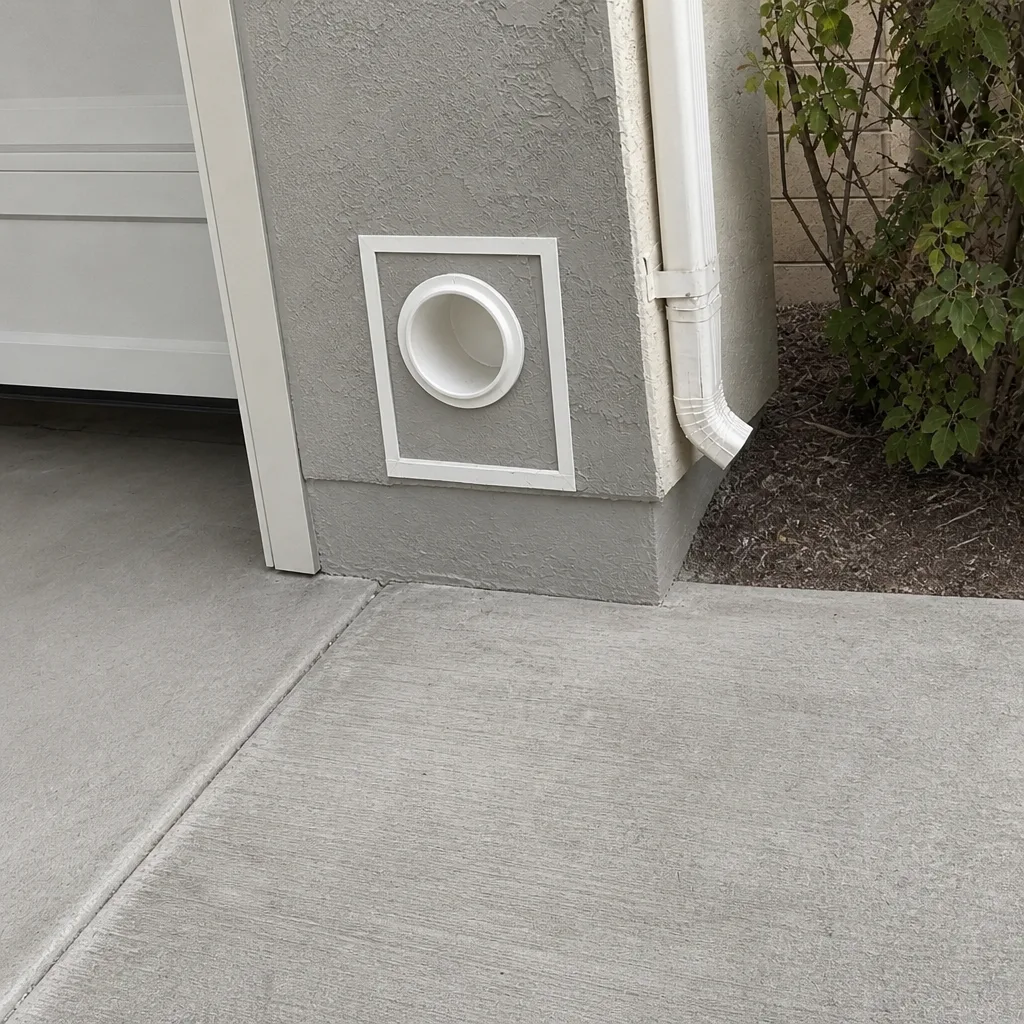 After
When to Call a Professional
A post-event duct cleaning in Portola Springs is worth scheduling when one or more of the following is true. You smell persistent smoke at the supply registers after ten minutes of fan-only operation. Your return filter has loaded noticeably faster than usual after the event. Anyone in the household is showing allergy-like symptoms that started post-event. Your system has been pulling smoke through it for multiple days with a low-MERV filter. Or your insurance claim includes HVAC contamination. Our technicians have up to 10 years of experience and use Rotobrush and Nikro systems with HEPA-filtered extraction, along with Abatement Technologies containment on applicable jobs. Air Duct Cleaning Portola Springs offers free estimates in Portola Springs – call (844) 685-3117. We answer 24/7. Fast dispatch from 7am to 7pm, Sunday through Friday.
Frequently Asked Questions
Yes, when the cleaning uses HEPA-filtered extraction on the equipment side rather than a shop vac with a paper filter. The ultrafine fraction of wildfire smoke is what lingers on duct and coil surfaces, and standard vacuums re-aerosolize it. Rotobrush and Nikro systems, along with Abatement Technologies containment, are built to capture it and keep it trapped. Call (844) 685-3117 for a free estimate and we’ll walk through what a post-event job involves.
It depends on your filter rating. If you have a MERV-13 (and your system is rated for it), keep windows shut, close the outdoor air intake, and run the fan on recirculation. If you have a basic filter and can smell smoke at the registers, shut the system off. Running it with an under-rated filter pushes fine particles through the house. Call (844) 685-3117 if you’re unsure which category your system falls into.
For most Portola Springs homes, cleaning every few years with an assessment after any major smoke event is a reasonable schedule. Households with pets, allergy concerns, or nearby construction work may need it more often. Post-event cleaning is a separate decision from routine cleaning; it’s triggered by contamination, not the calendar. Call (844) 685-3117 for a free assessment.
Cheap quotes usually mean consumer-grade vacuums without HEPA filtration, per-vent pricing that leaves most of the system untouched, or a very short job that only covers visible surfaces. Professional-grade equipment from Rotobrush, Nikro, and Abatement Technologies carries real cost, and the scope of the job matters more than the headline price. Get an itemized scope in writing before booking. Call (844) 685-3117 for a free estimate based on whole-system pricing rather than per-vent.
Ask for before-and-after photos of your own ducts, not stock images. A professional cleaning documents the interior of the ducts and the coil before and after, and the technician should be able to show you the equipment being used and the HEPA extraction setup on the job. On a post-event job that’s headed to an insurer, that documentation is also part of your claim file. Call (844) 685-3117 to schedule a documented assessment.
It depends on your policy and whether the fire event was declared a disaster. Some policies cover HVAC contamination as part of a broader smoke damage claim, and others don’t. Read your policy or call your adjuster before scheduling work. We can work with your insurer on the professional assessment side, and we can document the pre-cleaning condition of the ducts and coil. Call (844) 685-3117 for an assessment you can share with your adjuster.
The Bottom Line
Portola Springs homes sit in a part of Orange County where a regional fire event can push AQI past 150 for days, and most homeowners have no protocol for what to do with their HVAC system before, during, or after. The essentials are simple. Prepare in advance with a MERV-13 filter your system is rated for, sealed return ducts, and a clean duct network. During an event, close the fresh-air intake, keep windows shut, and decide between recirculation and shutdown based on what filter is in the slot. After the event, trust documentation over odor: PM2.5 and ultrafine ash don’t leave a duct system just because the smell does. Professional cleaning with HEPA-filtered extraction is what clears the residue, and pre-cleaning documentation is what makes an insurance claim defensible. If you’d rather have it assessed than guess, we’re a call away.
Call (844) 685-3117 for a free estimate on air duct cleaning, duct repair and sealing, HVAC cleaning, or post-event assessment in Portola Springs. We answer 24/7. Fast dispatch from 7am to 7pm, Sunday through Friday.
Written by the team at Air Duct Cleaning Portola Springs.