
Last updated November 23, 2026
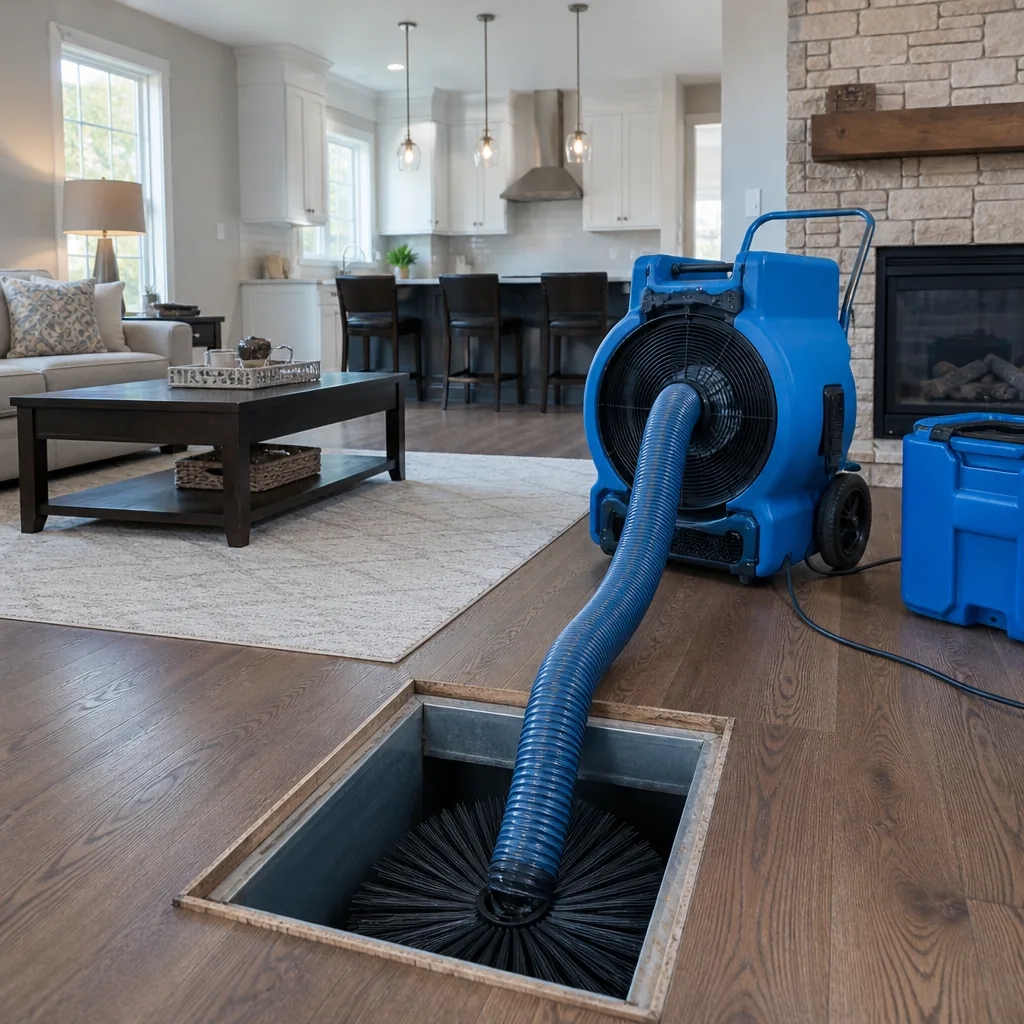 Whole-home duct cleaning
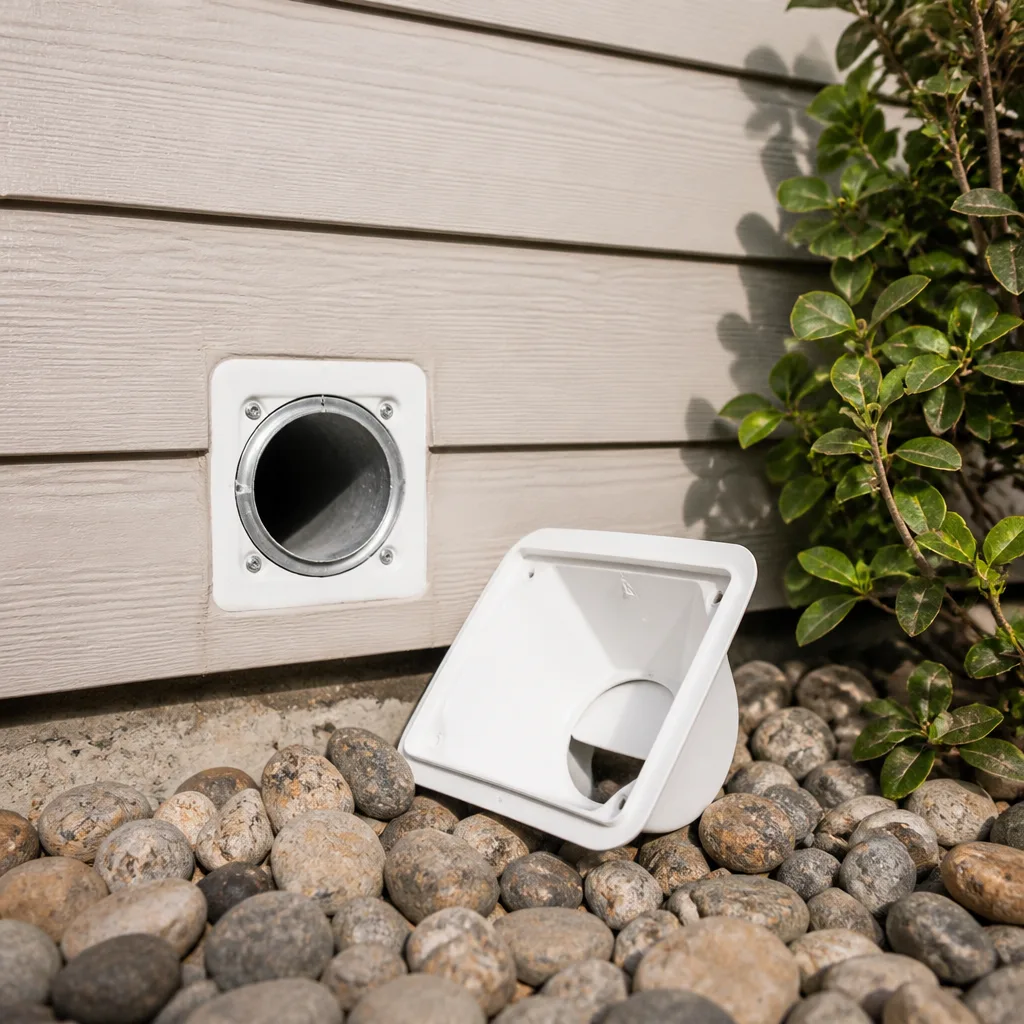 Dryer vent cleaning
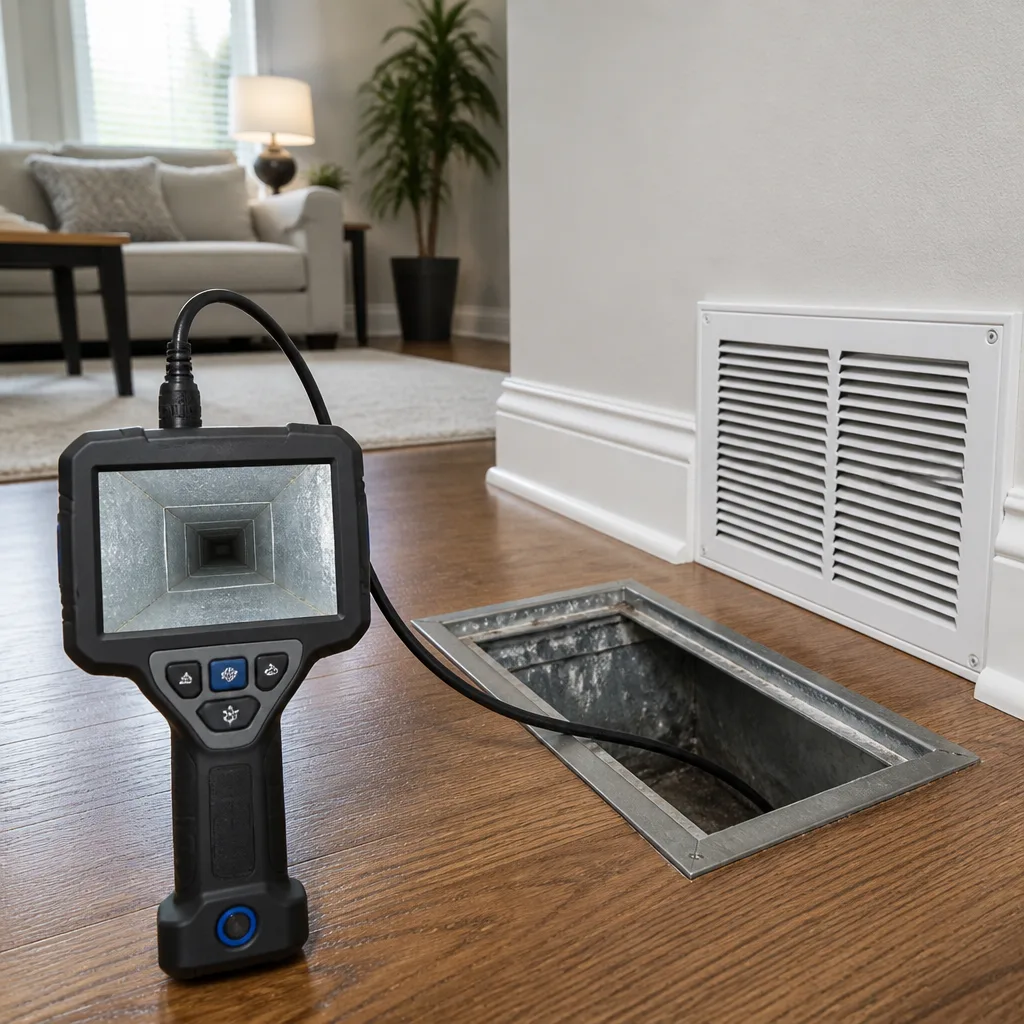 Camera inspection
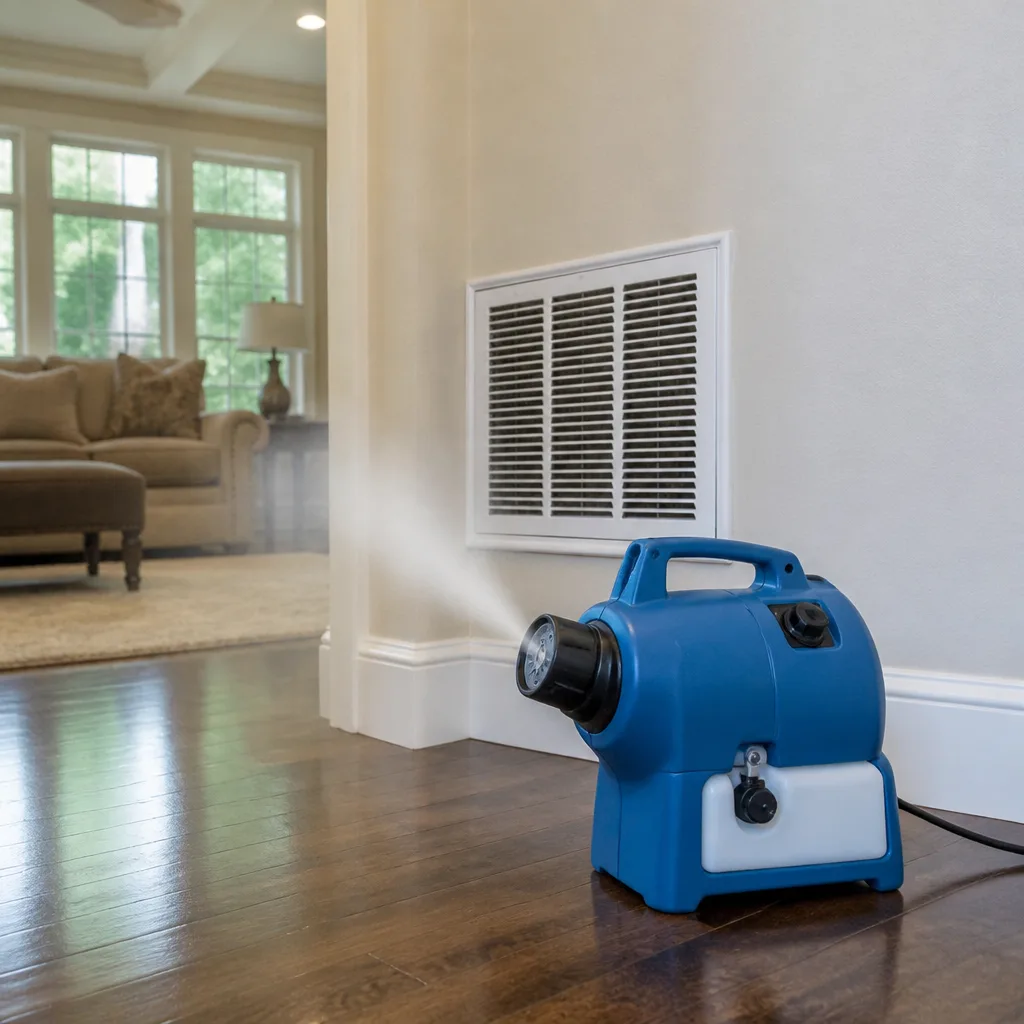 Sanitizing & deodorizing
Whole-system duct and dryer vent check with before-and-after photos - you see exactly what came out of your vents
That "$99 whole-house special" is a bait ad - the real number appears once they are in your hallway, or the "clean" is a shop-vac at the register. We photograph the inside of your ducts before and after instead.
Air Duct Cleaning Maintenance Checklist for Portola Springs Homeowners
Telling homeowners to “clean the ducts every three to five years” is like telling them to change their oil every three years regardless of mileage. It ignores every variable that actually decides when ductwork needs service: how hard the system runs, what’s happening outside, what just happened inside, and how the house is built. Portola Springs sits in a wind corridor that pushes fine particulate through HVAC filters for weeks at a time, and construction grading on the edges of the community kicks up dust that settles into return cavities. The calendar can’t see any of that. Measurable triggers can. This checklist walks through the signals worth watching, how to read them without opening anything up, and how to document condition over time so a technician sees exactly what changed and when. That’s a different way of thinking about duct maintenance, and it’s the one we’ll use here.
Key Takeaways
- Duct service should be triggered by observations, not by a fixed interval. Filters, register buildup, HVAC runtime, nearby construction and post-renovation debris are the five signals that matter most.
- Photos taken at the same register, angle and lighting every season build a record that tells a technician far more than a verbal description.
- Supply and return registers are the closest thing to a window into the duct interior you have without cutting anything open.
- Cleaning solves accumulation. Duct Repair & Sealing solves the leaky joints that let particulate back in and drive up runtime.
- Every applicable job we run uses Abatement Technologies filtration equipment, and duct interiors are cleaned with Rotobrush and Nikro systems – not consumer vacuums.
Styles & brands we work with
- Whole-home duct cleaning
- Dryer vent cleaning
- Camera inspection
- Sanitizing & deodorizing
Quick Answer
A duct maintenance checklist for Portola Springs should be built around measurable triggers, not a calendar: check filters against the Santa Ana wind season, watch supply and return register buildup, track HVAC runtime hours per season, inspect after any renovation or nearby grading, and photograph the same registers on a regular schedule. When two or more of those signals line up, it’s time for professional service – not before.
Table of Contents
- The Filter-Inspection Protocol for Portola Springs Wind and Grading Seasons
- Reading Supply and Return Registers as an Air Quality Proxy
- HVAC Runtime Thresholds That Accelerate Debris Deposition
- The Post-Renovation Checklist: Which Trades Leave Which Contaminants
- Documenting Duct Condition Over Time with Photos
- Why Leaks and Sealing Belong on the Checklist
- What Professional Equipment Actually Reaches
- When Signals Cross a Threshold
The Filter-Inspection Protocol for Portola Springs Wind and Grading Seasons
Filters are the first line of defense, and in Portola Springs they take a beating during two predictable stretches: the Santa Ana wind season, when dry inland air pushes fine dust across the region, and any period of active grading or construction near the community. Neither is a permanent condition, but both load the filter faster than a mild week will.
What we recommend is a simple observation loop rather than a “change it every X months” rule:
- Pull the filter and hold it up to light at the same interval every time – we suggest aligning your checks with the start and end of the wind season, plus one mid-summer look.
- Judge by light transmission, not color alone. A filter that blocks a bright window at arm’s length is beyond the point of useful capture, even if it doesn’t look dramatically gray.
- Note any visible dust ring around the filter frame. That ring is air bypassing the filter, which means particulate is going straight into the system and the ducts.
- Write the date and your light-transmission read into a notebook or phone note. Two years of notes will tell you your home’s real filter cadence better than any rule of thumb.
The filter slot also matters. A slightly undersized filter in a slot with visible gaps lets air around it, and that’s the kind of leak that quietly re-contaminates a freshly cleaned system. If you see the frame ring, that’s your signal to have the system checked – not the filter changed again.
Reading Supply and Return Registers as an Air Quality Proxy
You don’t need to open a duct to learn a lot about it. Supply and return registers are the visible endpoints, and the rate at which they accumulate is a reasonable stand-in for what’s building up downstream. This is one of the most useful observations a homeowner can make, and almost nobody does it consistently.
Here’s how to read the two sides:
- Supply registers (where conditioned air enters the room). A light film is normal. A visible dust “edge” growing back within weeks of cleaning is a sign the system is carrying more debris than a filter alone is catching.
- Return registers (where air returns to the system). Returns pull in room air and are naturally dirtier. If the grille faces start developing a dark, sticky film rather than dry dust, that’s a different signal – it suggests oil, cooking vapor or moisture riding along, and it’s worth a closer look.
- Register-to-register comparison. If one room’s supply looks markedly worse than the others, the branch serving it may be short, poorly sealed or sitting near a leak. Comparing registers tells you which branch to flag.
Photograph each register before you wipe it – that “before” photo is the one you’ll compare against next season. Wipe it clean, note the date, and repeat. Portola Springs homes with long heating runs through interior walls tend to show the clearest accumulation patterns at the return near the central hallway; that’s often the first register to watch.
HVAC Runtime Thresholds That Accelerate Debris Deposition
Ductwork doesn’t collect debris while the system is off – it collects debris in proportion to how many hours air is moving through it. That’s why two homes of the same age in the same part of Portola Springs can be at completely different points. One runs the system aggressively; one barely runs it.
In Orange County’s inland climate, the practical picture looks like this: mild, dry summers mean the air conditioner runs long stretches on the hottest weeks, while the heating side gets comparatively light use. The result is uneven wear across the system. The cooling season tends to push more total hours through the ducts than the heating season, and the return side absorbs the bulk of it.
A few runtime-driven guidelines worth applying:
- High runtime periods amplify every other signal. If your filter inspections get noticeably worse in a heavy cooling stretch, your ducts are also seeing more deposition during that window.
- Extended runtime with a fan set to “on” (rather than “auto”) pushes far more air through the system. It’s a great filter for air quality, but it accelerates accumulation – check registers on the same schedule as filters.
- System short-cycling or a struggling blower can mean leaks, undersized returns or a filter too restrictive for the system. Each of those behaviors affects how the ducts load up.
The takeaway: keep a rough note of roughly how many hours per season your system runs. If one season through the year clearly dominates, plan your professional inspections right after that season ends, so the technician sees the worst-case condition rather than a favorable snapshot.
The Post-Renovation Checklist: Which Trades Leave Which Contaminants
Renovations are the single most reliable duct-trigger in any home, and they’re more common in Portola Springs than in older neighborhoods because the community keeps growing – additions, kitchen remodels and landscaping work are regular events. Each trade leaves a different signature, and each takes a different amount of time to fully deposit. Knowing which is which tells you when to schedule professional service.
- Drywall work and sanding. Fine gypsum dust travels widely and deposits slowly – it stays airborne long after the sanders leave. Expect measurable register buildup over days, not hours.
- Woodworking and carpentry. Sawdust is coarser and heavier; it settles faster but leaves stubborn, sticky films on register grilles and in the return cavity. Carpentry dust is the one most likely to prompt a sticky-film observation at the returns.
- Flooring (tile, hardwood, sanding). Floor sanding throws extremely fine particulate that finds its way into running systems; it’s among the slowest to fully deposit and the easiest to spread through return air.
- Demolition and drywall removal. Heavy debris in the immediate room; mostly captured by plastic sheeting, but the dust that escapes travels through the return path.
- Painting and finishing. Vapor and overspray can coat duct interiors and register faces with a light film. Not a debris problem so much as a need for a sanitizing pass.
The practical rule: don’t schedule a cleaning while work is still ongoing. Wait until every trade has finished and the dust has had a chance to deposit – in most cases a matter of days for coarse debris and longer for the fine grades. Then have the system cleaned, and if the renovation also disturbed duct joints or moved any branches, have the sealing checked in the same visit.
Documenting Duct Condition Over Time with Photos
Photos are the backbone of a measurable checklist. A photograph is the only record a homeowner can hand a technician that shows exactly what changed and when – far more useful than a memory of “it seemed dirtier this year.”
A consistent photo routine does three things: it captures real change, it separates normal buildup from something worth acting on, and it removes the guesswork from any conversation with a contractor. Here’s the routine we suggest:
- Mark your spots. Pick the registers you’ll photograph (we suggest the main hallway return plus two supplies) and stick with those. Consistency is what makes the series useful.
- Standardize the shot. Same distance, same angle, same lighting, same time of day. A hand-held phone is fine. Keep the register in the frame corner as a reference point.
- Photograph on a fixed schedule. Season-by-season works well; treat it like the filter check. Name the files with the date.
- Clean the register after the “before” photo and photograph the clean state as a baseline. This gives you a true reference for “what dirty looks like” in your own home.
- Add a filter photo beside the register photos at the same intervals. Filters and registers together tell a much cleaner story than either alone.
When you’re ready for service, show the whole series. A technician who sees two years of consistent photos knows immediately whether the accumulation is normal, whether a leak or seal problem is likely, and whether a sanitizing treatment is worth discussing. It’s also a fair way to hold any contractor accountable: if your photos show the condition before, and the “after” doesn’t match, you have a record.
Why Leaks and Sealing Belong on the Checklist
Cleaning alone is only half the solution. A duct system that leaks at joints and seams pulls particulate in from unconditioned spaces – attics, wall cavities and crawl spaces – all day long. Clean those ducts, and the leak will refill them. That’s why Duct Repair & Sealing is a standalone service here, not an upsell. It addresses the root cause rather than the surface.
What to look for on the checklist:
- Visible gaps or disconnected joints at registers, plenum connections and anywhere duct sections meet. A register that moves loosely in its boot is a candidate.
- Dust streaks on ductwork in the attic or crawl space – those streaks are air escaping (or entering) at a leak.
- Uneven airflow between rooms, or rooms that never seem to get the same temperature as the rest of the house. Undersized or leaking branches show up here.
- High runtime for the conditions. If the system runs long on mild days, leaks are a likely contributor.
Sealing work on a Portola Springs home is often lumped into the same visit as cleaning, because the technician is already in the system. When the work is done and the joints are tight, the system holds its clean condition far longer – and in a dry, dusty stretch, that difference is noticeable within a single season. Pairing the sealing check with an equipment check on HVAC cleaning gives you a complete picture.
What Professional Equipment Actually Reaches
Part of building a real checklist is understanding the difference between what a homeowner can inspect and what a professional can actually resolve. The visible observations above tell you when to act. Professional equipment is what makes the difference once you do.
We run Rotobrush and Nikro duct cleaning systems – industry-recognized equipment used by certified remediation contractors, not consumer-grade shop vacuums. For larger or more heavily contaminated systems, Abatement Technologies air filtration and negative-air equipment is deployed – the same brand associated with professional mold and contaminant remediation, so we can manage the fine particulate and control the work area instead of just knocking dust loose. Duct interiors in sanitizing treatments use Guardsman-line products, and where relevant we install air quality hardware from Honeywell and Aprilaire, so cleaning and equipment upgrades can happen in the same visit. The full scope – cleaning, sealing, sanitizing – sits under one specialist, which is why one call covers what might otherwise take multiple vendors.
For a broader view of what a full air duct cleaning appointment covers here, that’s where the process detail lives.
When Signals Cross a Threshold
The checklist’s purpose is to tell you when to stop watching and act. In practice, the thresholds look like this:
- Filter light-transmission failing faster than usual across two consecutive checks – act on the filter and look at the register photos.
- A single register’s film growing back visibly within a few weeks of cleaning – the system is carrying more than the filter can catch.
- Runtime-dominant season just ended and register photos show a clear step up from the prior year – schedule a professional look.
- A renovation recently finished, all trades are done and dust has had time to deposit – clean before living with it longer than necessary.
- Visible leak at a joint, or dust streaks in the attic – sealing is worth a same-visit check alongside cleaning.
- Persistent odor or a visible sticky film at returns – a sanitizing pass deserves consideration.
Two or more of those together are your signal. One on its own may be seasonal noise. The value of the record is that it keeps you from over- or under-servicing a system that’s working hard for you.
See the difference
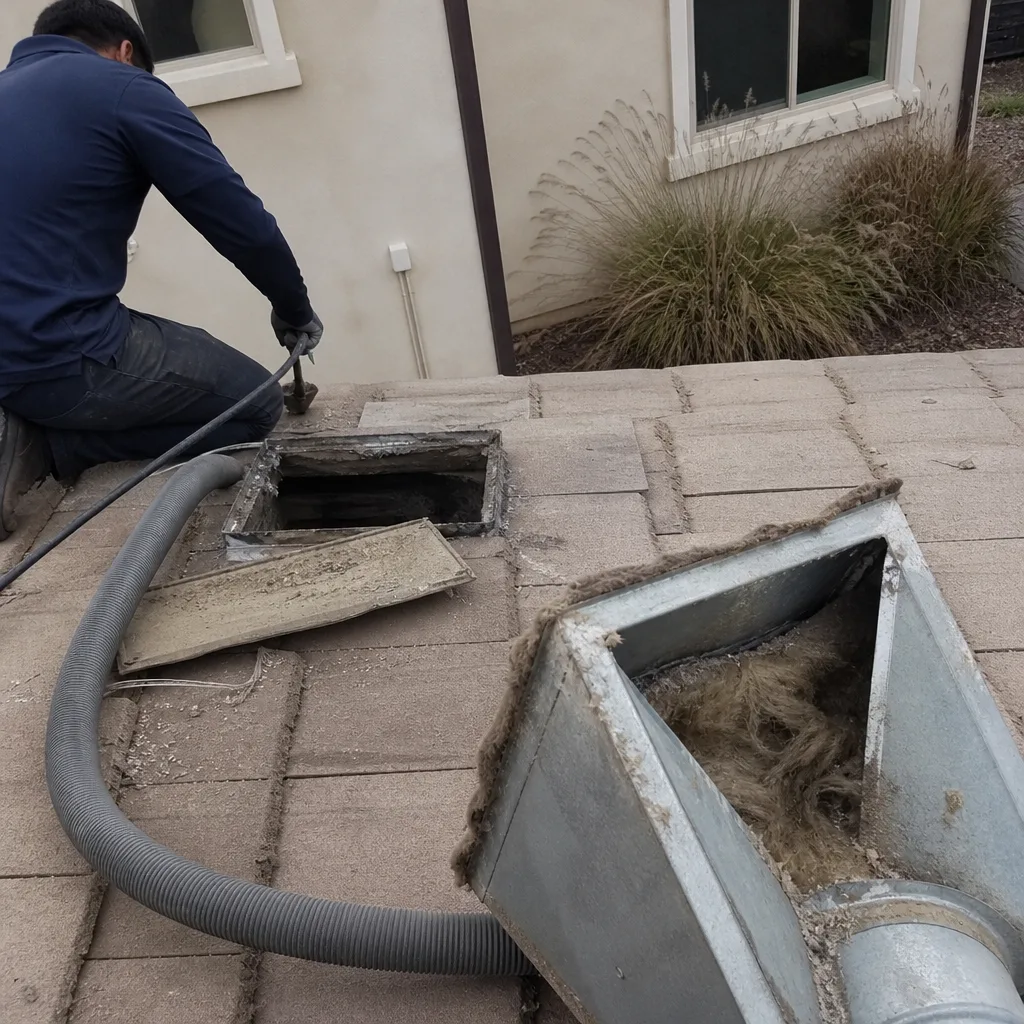 Before
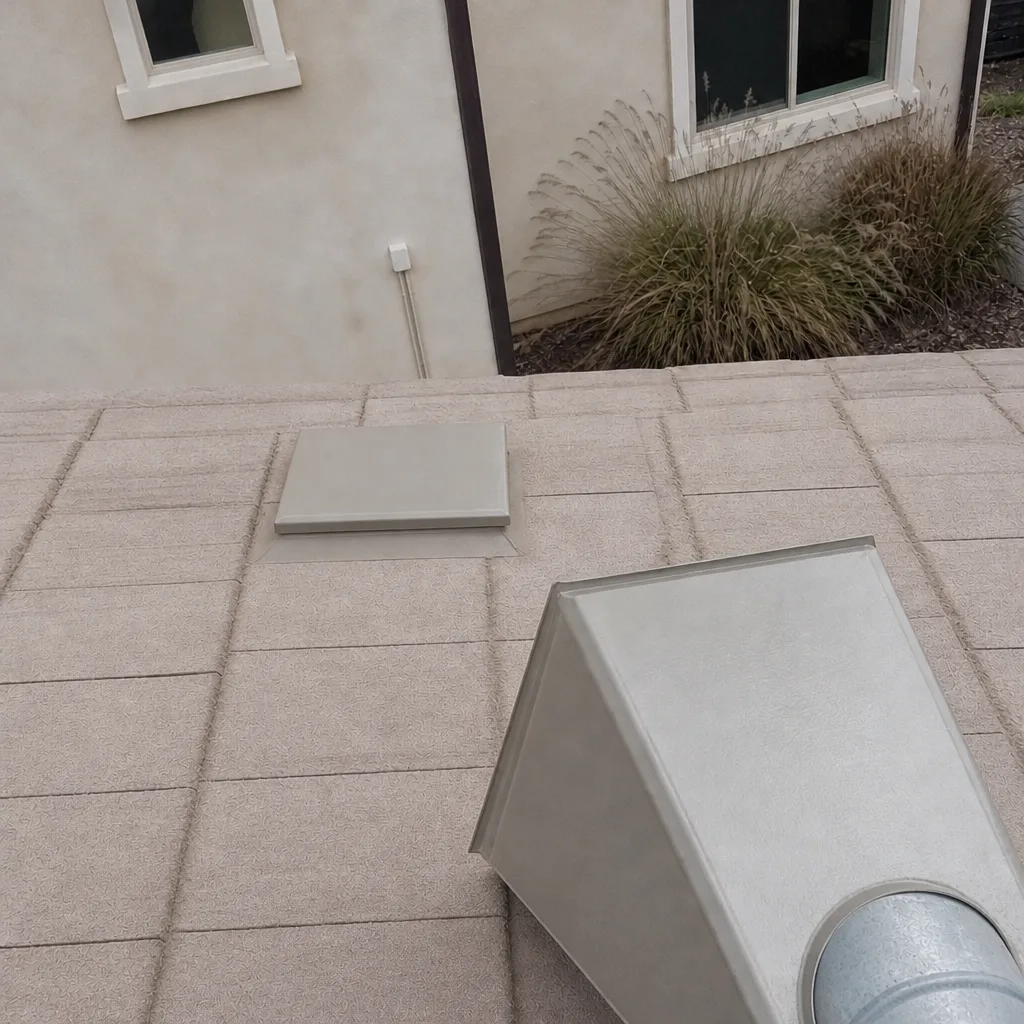 After
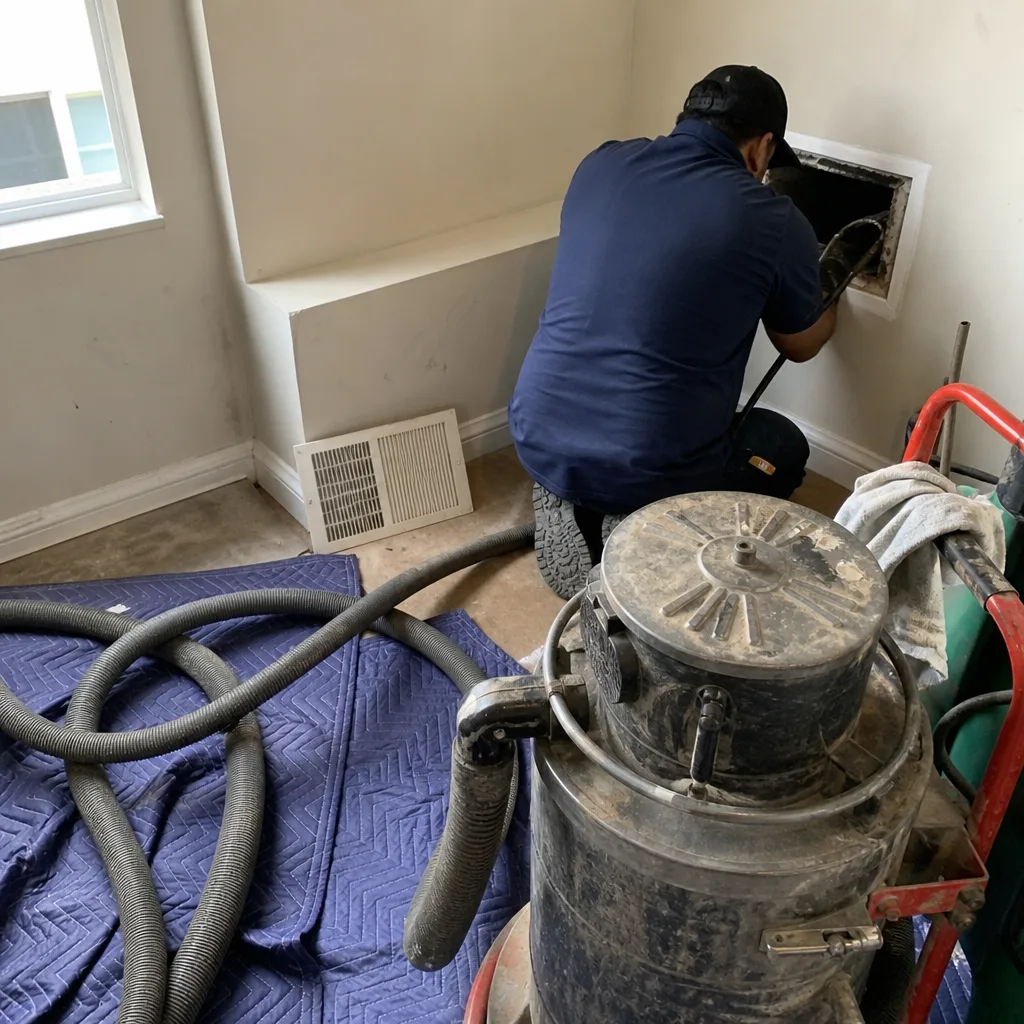 Before
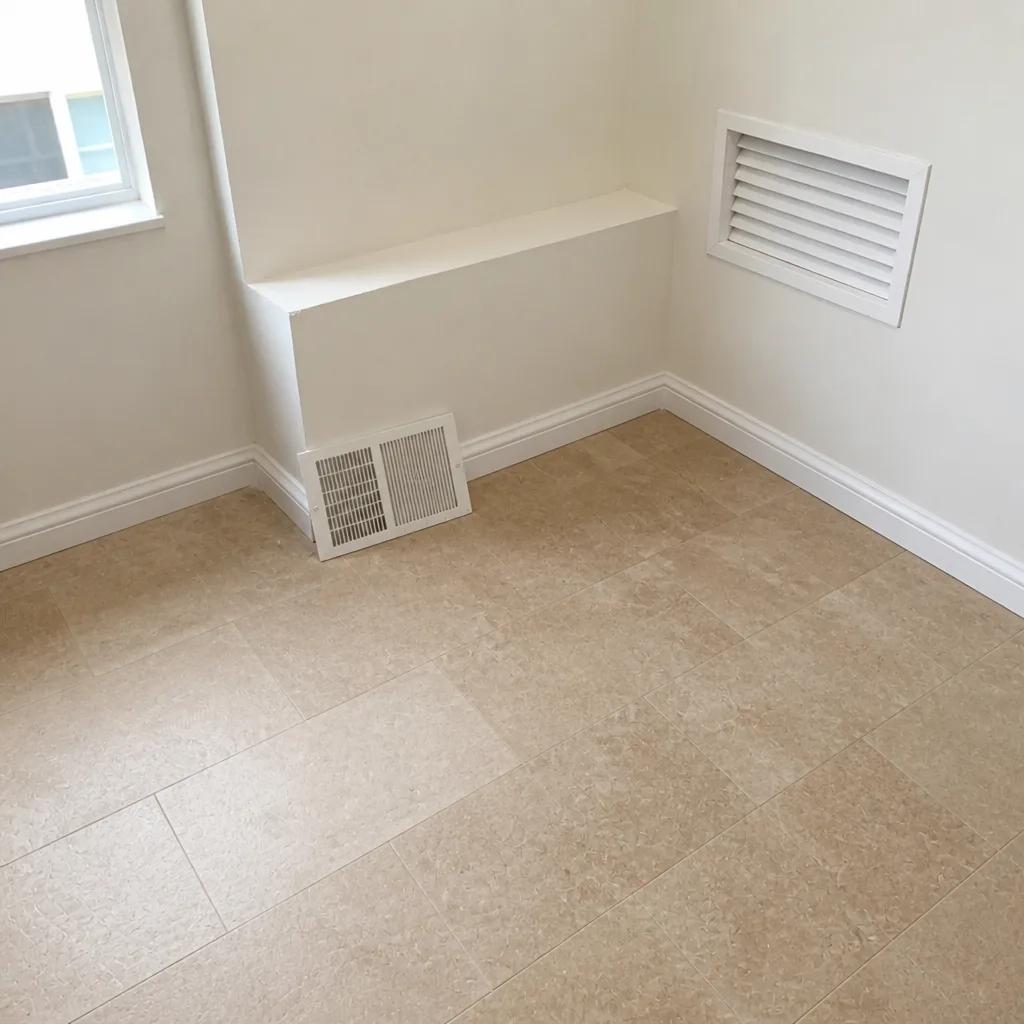 After
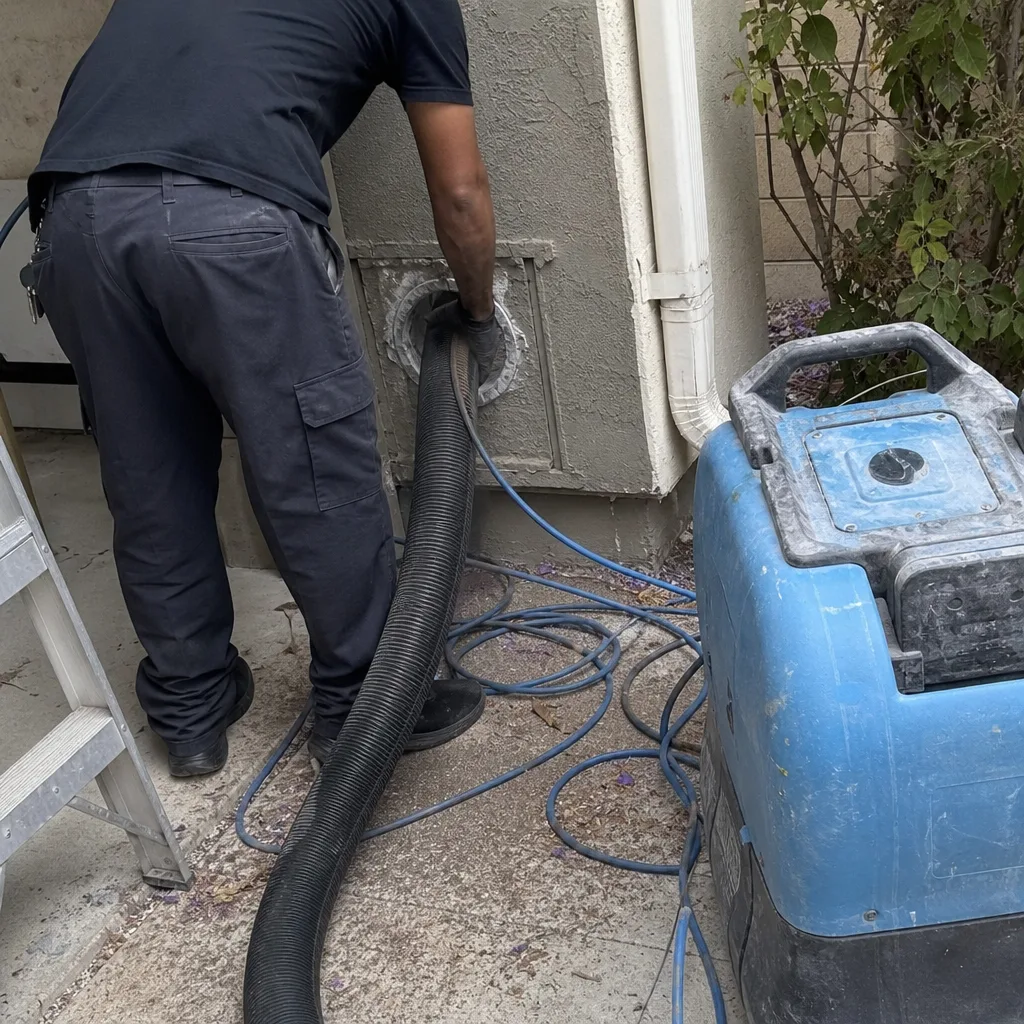 Before
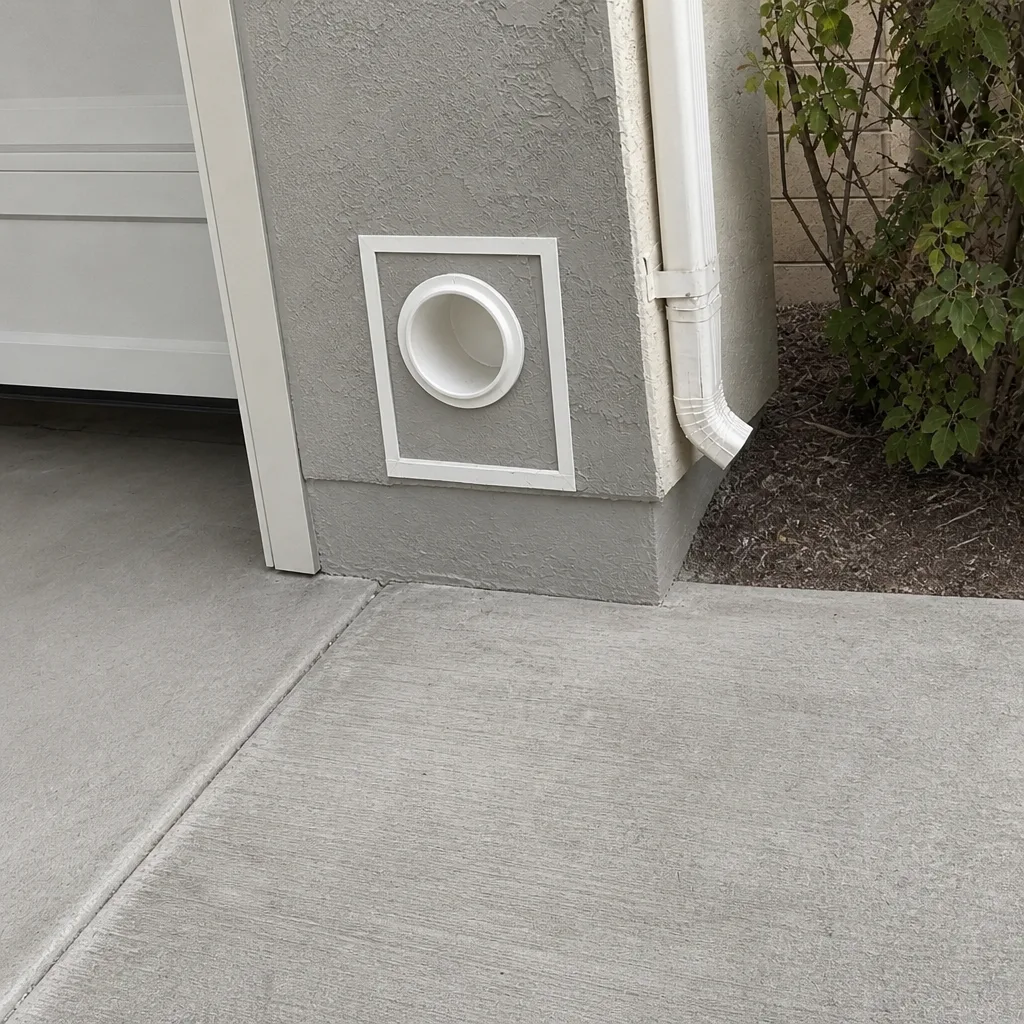 After
Common Mistakes to Avoid
- Following a fixed “every X years” schedule. It ignores the wind season, nearby grading and your home’s specific runtime. Portola Springs systems don’t all load at the same rate, and a calendar pretends they do.
- Only cleaning, never sealing. Duct cleaning without addressing leaky joints leaves the re-contamination path open. The clean condition lasts a fraction as long.
- Cleaning mid-renovation. Every trade still working is another chance to deposit into the ductwork. Wait for the trades to finish, then clean.
- Skipping the “before” photo. Without a documented baseline, you can’t compare this season to last, and you have no record of the condition when a contractor arrives.
- Judging the filter by color alone. A light-transmission check tells you more than the color of the media. Dark filters can still be passing fine particulate; bright ones can be loaded.
- Ignoring the register frame ring. That dust around the filter frame means air is bypassing the filter and going straight into the system.
- Assuming a dust problem is only a dust problem. Persistent sticky films or odor at the returns are worth looking at as a sanitizing question, not just a cleaning one.
When to Call a Professional
There’s a point where observation stops being enough. Call a professional when two or more checklist signals line up, when a renovation has just wrapped and fine dust is sitting in the return path, when a register shows visible buildup within weeks of cleaning, or when you notice a leak at a joint or dust streaks in the attic that suggest the system is pulling air from the wrong side. If you’re seeing persistent odor or a sticky film at the returns, that’s a sanitizing conversation too. Air Duct Cleaning Portola Springs offers free estimates in Portola Springs – call (844) 685-3117. Call (844) 685-3117. We answer 24/7. Fast dispatch from 7am to 7pm, Sunday through Friday.
Frequently Asked Questions
There’s no fixed interval – it depends on your home’s runtime, the wind and grading seasons, and any renovation work. The better approach is to track the checklist signals and act when two or more align. Most Portola Springs homes that stay on the signal-based checklist end up cleaning less often than a “three to five year” rule would suggest, because the timing is tied to actual accumulation.
Yes, it drives more fine particulate into the system during a predictable stretch. Dry inland air pushes dust across the region, and a running HVAC system pulls it through filters and into the return path. Keeping your filter checks aligned with the wind season gives you the clearest picture of how much your particular home is loading.
Often yes, by watching the supply and return registers. Visible film growing back within weeks, dark sticky buildup at returns, or uneven register dirt between rooms all point to interior accumulation. Photographing those registers over time turns the observation into a record you can show a technician.
After. Every trade still working is another chance to send debris into the system, and the fine dust from sanding and drywall needs time to deposit. Wait until all trades have finished and the dust has settled, then clean – and check the joints in the same visit if any ductwork was disturbed.
Cleaning removes accumulated debris; sanitizing treats the duct interior for microorganisms and odor-causing films. They’re related but distinct, and we treat them separately – cleaning first, sanitizing where the observation (odor, sticky films) calls for it, using Guardsman-line products for duct interiors.
If your checklist shows visible leaks, dust streaks in the attic, uneven airflow, or long runtime for pleasant conditions, sealing is worth a same-visit check. Cleaned ducts with leaking joints re-contaminate quickly, so sealing is what protects the cleaning investment. Call (844) 685-3117 for an exact assessment – estimates are free.
The Bottom Line
Duct maintenance is a signal-reading discipline, not a calendar chore. Watch your filter transmission against the wind season, read your supply and return registers, note how hard the system runs, plan around renovations, and photograph it all on a consistent schedule. When two or more signals line up, that’s your cue. Cleaning is the starting point; duct repair and sealing is what makes the clean condition last. Portola Springs homeowners who track these signals end up servicing their systems at the right times, on evidence instead of a guess. To see the full picture of the service behind the checklist, start with Air Duct Cleaning Portola Springs.
If you’d rather have a specialist read the signs with you, Air Duct Cleaning Portola Springs brings Rotobrush and Nikro equipment, Abatement Technologies filtration, and Guardsman-line sanitizing to the job, plus the sealing and air quality upgrades that keep a system clean. Dryer vent work is in scope too – dryer vent cleaning is often part of the same visit. Call (844) 685-3117. We answer 24/7. Fast dispatch from 7am to 7pm, Sunday through Friday.
Written by the team at Air Duct Cleaning Portola Springs.